Ruth KJ3 · BiblicalTools
A book of the Bible · four chapters

Ruth

A foreign widow, a field at harvest, a kinsman-redeemer — and the line that leads to David.

Where you go, I will go. And where you stay, I will stay. Your people shall be my people, and your God my God.

Ruth 1:16 (KJ3)
The whole journey, in one view
⤢ Tap to enlarge

From famine in Moab to the gate of Bethlehem — the four movements of Ruth, the four marks of the go'el, and the family tree that ends with King David. Read the story chapter by chapter →

Infographic made with Google NotebookLM
Watch the overview

A ~6-minute visual walkthrough of Ruth's story — pairs well with the infographic for class intros or sharing. Video made with Google NotebookLM

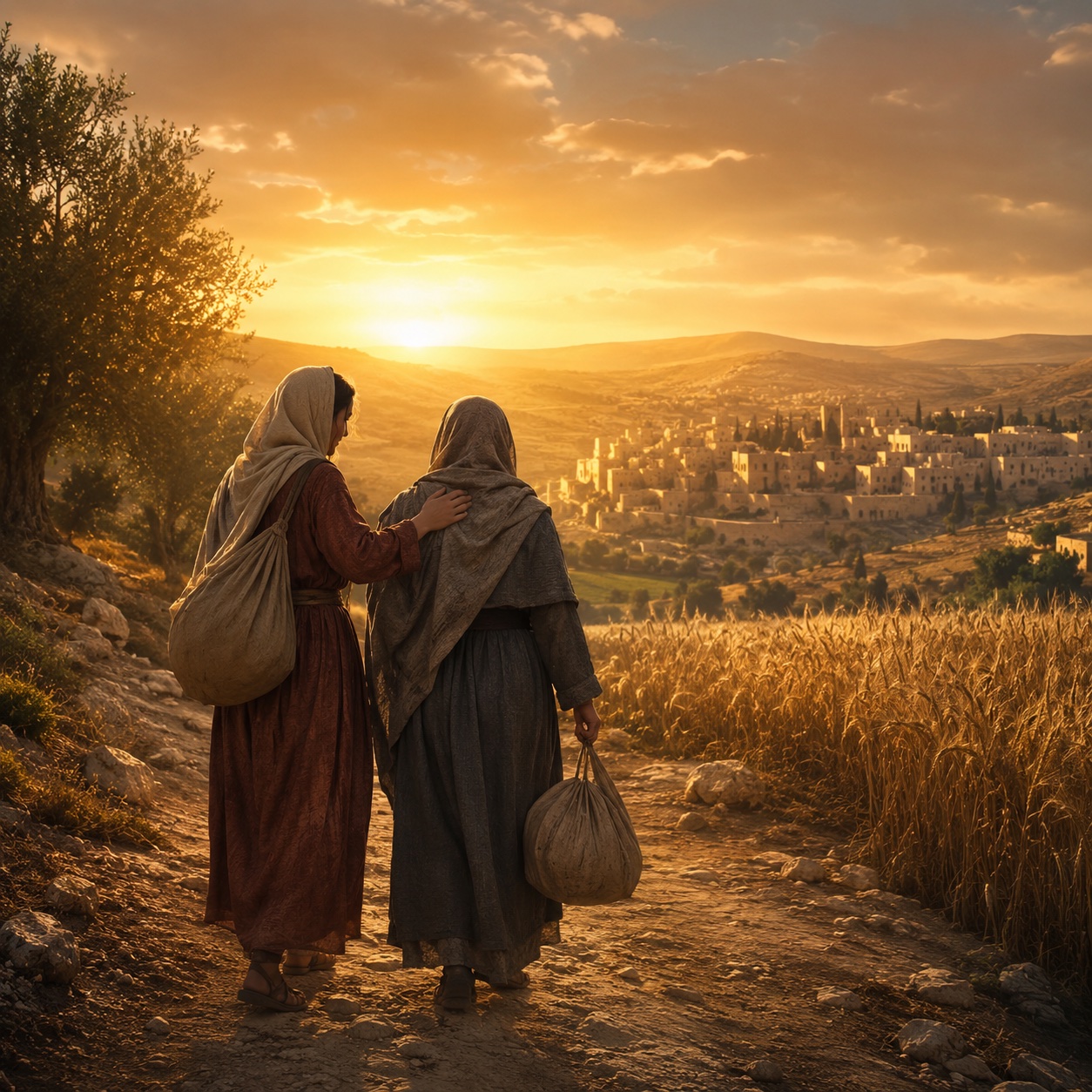
Ruth and Naomi on the road to Bethlehem at harvest — album art

Scripture Song · Ruth 1, word for word (KJ3)

Ruth: The Whole First Chapter

The entire first chapter of Ruth set to music — sung word for word from the KJ3 Literal Translation. Famine and loss in Moab, Ruth's covenant vow, and the return to Bethlehem at the barley harvest.

0:00 / 6:10

More Scripture music →

The narrative

Four chapters, one redemption

Famine sends a family to Moab; loss sends Naomi home empty. What follows is a quiet account of loyalty, providence, and a redeemer who restores what was lost.

💔
Tragedy & loyalty

Chapter One

Ruth 1

Famine drives Elimelech's family from Bethlehem ("House of Bread") to Moab. After the death of husband and both sons, Naomi turns home "empty." But Ruth clings to her mother-in-law, choosing Naomi's God as her own.

"Where you die, I will die, and there I will be buried. May Jehovah do to me, and more so, if anything but death part you and me." Ruth 1:17 (KJ3)
🌾
Divine providence

Chapter Two

Ruth 2

Ruth "happens" upon the field of Boaz — a wealthy kinsman of Elimelech. The lord of the harvest shows extraordinary kindness to the foreign gleaner: protection, provision, and blessing. God's hand guides every "coincidence."

"Jehovah shall repay your work… under whose wings you have come to take refuge." Ruth 2:12 (KJ3)
🌙
The threshing floor

Chapter Three

Ruth 3

Following Naomi's bold plan, Ruth approaches Boaz at midnight on the threshing floor and asks him to "spread his skirt" over her — a marriage proposal invoking his role as kinsman-redeemer. Boaz honors her virtue and commits to redeem, though a nearer kinsman has first rights.

"I am your handmaid Ruth, and you shall spread your skirt over your handmaid, for you are a kinsman redeemer." Ruth 3:9 (KJ3)
👑
Redemption complete

Chapter Four

Ruth 4

At the city gate before ten elders, the nearer kinsman refuses redemption lest he "mar his inheritance." Boaz redeems both the land and Ruth. Their son Obed becomes grandfather to David — placing Ruth, a Moabite convert, in the direct lineage of the Messiah.

"This is a son born to Naomi; and they called his name Obed. He is the father of Jesse, the father of David." Ruth 4:17 (KJ3)
The key idea

The kinsman-redeemer

Understanding the go'el unlocks Ruth's deepest meaning — and its connection to Christ.

גֹּאֵל
Go'el

From the Hebrew root גאל (ga'al), "to redeem, act as kinsman."

The go'el was a near kinsman with both the right and the responsibility to act for a relative in distress. Under Levitical law he could buy back land sold in poverty, redeem a relative sold into slavery, or marry a childless widow to preserve the family name and inheritance. Boaz fulfills this role completely — a stunning picture of Christ, our ultimate Redeemer.

1

Must be a kinsman

Only a blood relative could serve. Boaz was "of the family of Elimelech" (2:1). Christ became our kinsman through the incarnation (Heb 2:14-17).

2

Must be able

The redeemer needed resources to pay. Boaz was "a mighty man of wealth" (2:1). Christ had infinite worth to pay for sin.

3

Must be willing

The closer kinsman refused, "lest I mar my own inheritance" (4:6). Boaz was eager. Christ willingly laid down His life (John 10:18).

4

Must be free

A slave could not redeem another; the redeemer had to be free himself. Christ was without sin, thus free to redeem (Heb 7:26-27).

The redemption request

"I am your handmaid Ruth, and you shall spread your skirt over your handmaid, for you are a kinsman redeemer."

"Spread your skirt" (כָּנָף — kanaph, "wing/corner") echoes Boaz's earlier blessing that Ruth had come "under whose wings you have come to take refuge" (2:12). She asks him to become the answer to his own prayer.

Foreshadowing

Boaz as a type of Christ

Boaz foreshadows the Greater Redeemer who would come from his own lineage.

🌾 Boaz in Ruth
✝ Jesus Christ
From BethlehemRuth 1:1, 2:4
Born in BethlehemMatthew 2:1
Lord of the harvestRuth 2:4
Lord of the harvestMatthew 9:38
Kinsman with the right to redeemRuth 2:20
Made like His brethrenHebrews 2:17
Wealthy & able to payRuth 2:1
Paid with His precious blood1 Peter 1:18-19
Willing when another refusedRuth 4:6, 4:9
Willing to saveJohn 10:18
Married a Gentile brideRuth 4:13
Takes the assembly as His brideEphesians 5:25-27
Gives Ruth restRuth 3:1
“I will give you rest”Matthew 11:28
Spreads his covering over herRuth 3:9
Covers us with His righteousnessIsaiah 61:10
The family tree

The lineage of grace

Ruth ends with a genealogy connecting a Moabite widow to King David — and ultimately to Jesus Christ.

Perez (פֶּרֶץ)
Son of Judah & Tamar
Hezron → Ram → Amminadab → Nahshon
Generations in Egypt & the wilderness
Salmon
Married Rahab the harlot (Matt 1:5)
Boaz + Ruth → Obed
"Father of Jesse" (Ruth 4:17)
Jesse
"A shoot from the stump of Jesse" (Isa 11:1)
King David 👑
King of Israel
… Solomon … Josiah …
Through the kings of Judah
✝ Jesus Christ
Son of David (Matt 1:1)

Grace to the outsider

Tamar
A Canaanite who posed as a prostitute (Gen 38), yet an ancestor of Messiah.
Rahab
A Canaanite harlot (Josh 2), saved by faith, mother of Boaz.
Ruth
A Moabitess — excluded from the congregation (Deut 23:3) — yet included by grace.
Bathsheba
"Wife of Uriah" (Matt 1:6) — a reminder of sin, yet mother of Solomon.

These four women in Matthew's genealogy show that the Messiah came not for the righteous but for sinners. Grace reaches the outsider.

The closing genealogy

17 …they called his name Obed. He is the father of Jesse, the father of David. (Ruth 4:17)
18-20 …Pharez fathered Hezron; and Hezron fathered Ram; and Ram fathered Amminadab; and Amminadab fathered Nahshon; and Nahshon fathered Salmon;
21 and Salmon fathered Boaz; and Boaz fathered Obed;
22 and Obed fathered Jesse; and Jesse fathered David. (Ruth 4:18-22)
Who's who

Character profiles

The people whose lives interweave in this narrative of redemption.

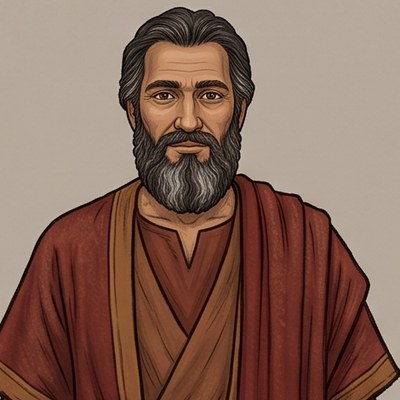
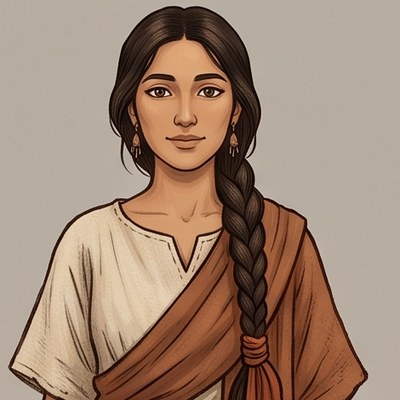
Ruth — portrait

Ruth

"Friend / companion" (רוּת)

🏠Moabitess — from a nation hostile to Israel
💍Widowed young; chose loyalty over security
🙏Convert: "Your God shall be my God"
💪"A woman of virtue" (3:11 — אֵשֶׁת חַיִל)
"Your people shall be my people, and your God my God. Where you die, I will die, and there I will be buried." Ruth 1:16-17
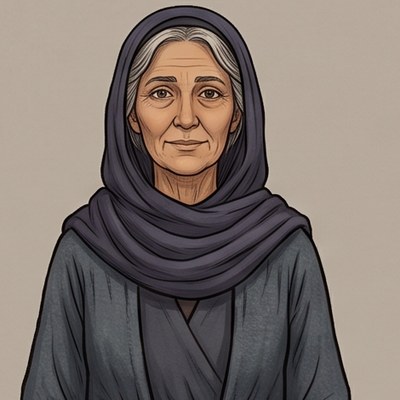
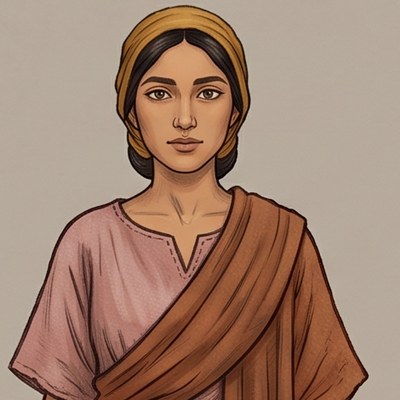
Naomi — portrait

Naomi

"Pleasant" → "Mara" (bitter)

💔Lost husband and both sons in Moab
🏃Returns to Bethlehem "empty" (1:21)
🧠Wise counselor — guides Ruth to Boaz
👶Becomes nurse to Obed — restored!
"I went out full, and Jehovah has brought me back empty. Why do you call me Naomi, since Jehovah has set His eye against me?" Ruth 1:21
Boaz — portrait

Boaz

"In him is strength" (בֹּעַז)

💰"A mighty man of wealth" (2:1)
🌾Landowner in Bethlehem, lord of the harvest
⚖️Kinsman-redeemer (go'el) who fulfills the duty
✝️Type of Christ — willing, able, qualified
"Blessed be you of Jehovah, my daughter… for all the gate of my people know that you are a woman of virtue." Ruth 3:11
Orpah — portrait

Orpah

"Back of the neck" (עָרְפָּה)

💍Moabitess; married Chilion
😢Wept and kissed Naomi (1:14)
🔙Returned to Moab, "to her people and her gods"
⚖️A foil to Ruth's persevering faith
"Orpah kissed her mother-in-law, but Ruth clung to her." Ruth 1:14

Minor characters

Elimelech
"My God is King" — Naomi's husband, who fled to Moab and died there (1:3).
Mahlon & Chilion
"Sickly" & "pining" — sons who married Moabite women; both died (1:5).
The nearer kinsman
Unnamed — "such a one" (4:1). Refused redemption (4:8).
Obed
"Servant" — son of Boaz and Ruth, "a restorer of life" to Naomi (4:15).
The complete book

The Book of Ruth — KJ3

Read the full text in the King James 3 Literal Translation.

Ruth, chapter 1
Check yourself

Test your knowledge

Ten questions on the people, places, and meaning of Ruth.

Question 1/10
Score 0

For reflection & discussion

Take it deeper

Open-ended questions for personal study or a small group. Pair them with the chapter text above and the video walkthrough.

Loyalty · hesed

Ruth binds herself to Naomi with no guarantee of reward (1:16–17). Where is loyal, covenant love costing someone something in this story — and where is it costing you?

Providence

Ruth “happened” to glean in the field belonging to Boaz (2:3), yet the narrator plainly sees God’s hand. Where have you later recognized providence in something that felt like chance at the time?

Empty to full

Naomi leaves “full” and comes home “empty,” even renaming herself Mara — bitter (1:20–21). How does the book carry her from empty back to full, and who does the filling?

The redeemer

A go’el had to be related, able, and willing to redeem. Which is hardest for you to believe about how God redeems — that he is near, that he is able, or that he is willing?

The outsider welcomed

Ruth, a Moabite widow, is folded into Israel’s story and the line of David (4:13–17). What does her inclusion say about who belongs in God’s family?

This week

Boaz notices, protects, and provides for someone with no claim on him (2:8–16). Who in your life is “gleaning at the edges” right now — and what would noticing them look like?