A new Sunday Bible Study series

Who is my neighbor?

A live Sunday Bible study on what sets us apart

“But desiring to justify himself, he said to Jesus, And who is my neighbor?”

Luke 10:29· KJ3

A lawyer asked Jesus this. Jesus answered with a story, and then asked a question of his own. Each Sunday we sit at one table and follow it, wherever it leads. Come as you are.

Walk the road

Jesus answered with a story

It is only six verses long. Walk it slowly, from Jerusalem down to Jericho.

Jerusalem
  1. The man

    A certain man was going down from Jerusalem to Jericho, and fell among plunderers, who both stripping him and laying on blows, went away, leaving him being half dead.

    verse 30
  2. The priest

    a certain priest was going on that road; and seeing him, he passed on the opposite side.

    verse 31
  3. The Levite

    a Levite, also being at the place, coming and seeing him, he passed on the opposite side.

    verse 32
  4. The Samaritan

    But a certain traveling Samaritan came upon him, and seeing him, he was filled with pity.

    verse 33
  5. The oil

    coming near, he bound up his wounds, pouring on oil

    verse 34
  6. The inn

    he brought him to an inn and cared for him.

    verse 34
  7. The promise

    Care for him, and whatever more you spend, on my return I will repay you.

    verse 35
Jericho
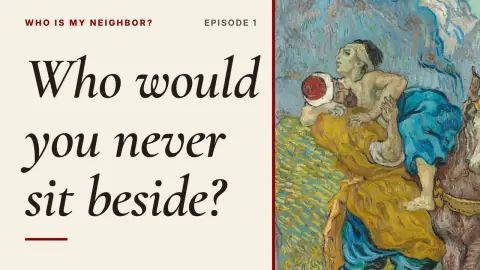
Painting: on a mountain road, a man in a yellow robe strains to lift a wounded, half-clothed man onto his horse. An open chest lies spilled on the ground, and far behind them a figure walks away down the road.
Vincent van Gogh, The Good Samaritan (after Delacroix), 1890. Kröller-Müller Museum, Otterlo. Public domain.
The turn

Which, therefore, of these three seems to you to have become a neighbor to the one having fallen among the plunderers?

Luke 10:36 · KJ3

Jesus put it to the lawyer. He puts it to you.

And he said, The one doing the deed of mercy with him. Then Jesus said to him, Go, and you do likewise.

Luke 10:37· KJ3

Go, and you do likewise.

Join us Sunday
For those who love the Scriptures

He answered rightly

The lawyer knew the Law, and Jesus told him so.

And He said to him, You have answered rightly; do this, and you shall live.

Luke 10:28· KJ3

Then came one more question.

But desiring to justify himself, he said to Jesus, And who is my neighbor?

Luke 10:29· KJ3

Most of us know that place: one more proof, one more definition, and then we will be sure. Jesus gave him no definition. He told him a story, and said, do.

You search the Scriptures, for you think in them you have everlasting life. And they are the ones witnessing concerning Me. And you are not willing to come to Me that you may have life.

John 5:39–40· KJ3

Knowledge puffs up, but love builds up.

1 Corinthians 8:1· KJ3

But if anyone loves God, this one has been known by Him.

1 Corinthians 8:3· KJ3

For now we see through a mirror in dimness, but then face to face. Now I know by part, but then I will fully know even as I also was fully known.

1 Corinthians 13:12· KJ3

One breath

Isaiah announces it all together, and Jesus read these words aloud at Nazareth Luke 4:16–21.

The Spirit of the Lord Jehovah is on Me, because Jehovah has anointed Me to bear good news to the poor one. He has sent Me to bind up the broken of heart, to proclaim liberty to captives, and complete opening to the ones being bound; to call out the acceptable year of Jehovah, and the day of vengeance of our God; to comfort all those mourning;

Isaiah 61:1–2· KJ3

When widows were being overlooked, the Twelve kept to the Word, and still asked for “seven men full of the Holy Spirit and wisdom, whom we shall appoint over this need.” Acts 6:3

And Jesus went about all the cities and the villages teaching in their synagogues, and proclaiming the gospel of the kingdom, and healing every disease and every infirmity of body among the people.

Matthew 9:35· KJ3

The one saying to abide in Him ought so to walk himself even as that One walked.

1 John 2:6· KJ3

On a road

Two disciples were walking to Emmaus, and a stranger joined them on the way.

And beginning from Moses, and from all the prophets, He explained to them, in all the Scriptures, the things about Himself.

Luke 24:27· KJ3

“And they said to one another, Was not our heart burning within us as He spoke to us in the way, and as He opened up to us the Scriptures?”Luke 24:32 · KJ3

If you take the Scriptures seriously, this series is for you. Bring your questions, every one of them, to the table on Sunday. We will open the text together.

How the study works

A table, not a lecture

Live, at no cost, and open to everyone. Each week: one story, one thing that divides people, and one question.

Try the three circles

Where would you put each of these? Drag a card onto a circle, or tap a card and then a circle.

Opinion Differ Stand together
Stand together
Differ
Opinion

The series takes questions like these to the text, one at a time, and asks whether each one lands where we put it.

Your answers stay on this device.

Past sessions

Series begins

Each study is posted here after it airs, newest first, with its sheet to print.

Episode 1Series begins soon · live Sundays at 2:30 PM Pacific / 5:30 PM Eastern

Enemies at the Table

Matthew 9:9Matthew 10:2–4Luke 6:13–16Mark 3:16–19Acts 1:13

Matthew collected taxes for Rome. Simon was a Zealot, sworn against Rome. Jesus chose both of them for the same twelve.

Matthew and Thomas; James the son of Alpheus, and Simon, the one being called Zealot;

Luke 6:15· KJ3
The question for the room

Who would you never sit beside?

Recording comingIt will be posted here after Episode 1 airs.
The series

Ten movements, one table

A lawyer asked Jesus where his duty ends, and Jesus set a table. From there the series walks in order: what every person needs; what people chase when a need goes unmet, and who feeds on that; the lines we draw and the judgments we make; the disputes themselves; and then the way across.

Each movement takes a seat. Choose one to open it. The last chair is empty.

You don't need to catch up. Take the empty chair this Sunday.

Every study

The library

You don't need to catch up. Take the empty chair this Sunday.

Your journey: 0 of 144 watched
I The TableA table Jesus set himself, with a tax collector for Rome and a Zealot seated at it. 5
Song for this movement: Psalm 23 · coming
1 Enemies at the TableMatthew 9:9 · Matthew 10:2–4 · Luke 6:13–16 · Mark 3:16–19 · Acts 1:13
The question for the room

Who would you never sit beside?

Around the table
  1. What two titles do the lists attach to Matthew and to this Simon?
  2. What would a tax collector for Rome and a Zealot have thought of each other in that day?
  3. Matthew writes his own old job into the list. Why might he keep that label?
  4. Jesus called each man as he was. What did each one have to give up to sit with the other?
  5. Think of a group you belong to. Who would be its “Matthew” and its “Simon”?
  6. If Jesus picked the twelve on purpose, what does this choice say about the people he puts beside you?
  7. Is there someone you would leave a group over before you would sit beside them?
Leave with
  • What would it cost you to put that person's name on the empty chair this week?
Recording: posted here after this study airs.
2 The Three Circles1 Corinthians 15:3–4 · Ephesians 4:3–6 · Romans 14:1
The question for the room

Which tier did you put your last argument in?

Around the table
  1. What does Paul say he handed on "among the first things"?
  2. Corinth was full of disputes. Why would Paul need to tell them what came first?
  3. Read the "one"s in Eph 4:4–6. Which of them do believers you disagree with also hold?
  4. Name a recent disagreement. Which circle would you put it in?
  5. Where did you learn which circle things belong in: from the text, or from your group?
  6. When a belief moves from circle 2 into circle 1, what happens to the people who hold the other view?
  7. Have you ever put a person in a circle instead of a belief?
Leave with
  • If you moved that argument down one circle, who could you sit with again?
Recording: posted here after this study airs.
3 Divided Where There Is No Division1 Corinthians 1:10–13 · 1 Corinthians 3:3–6
The question for the room

What label do you wear that the text never gave you?

Around the table
  1. What four names were the Corinthians rallying behind?
  2. What does Paul say Apollos and he were actually doing?
  3. Why would people in a young assembly attach themselves to a favorite teacher?
  4. Paul's three questions in 1:13 have obvious answers. Why ask them at all?
  5. What names, styles or labels do believers rally behind today?
  6. Can a person use "of Christ" as a weapon? What would that sound like?
  7. Paul calls their divisions fleshly. What if some of the divisions we defend as doctrine are really about loyalty?
Leave with
  • Whose teaching do you defend more quickly than you read the text?
Recording: posted here after this study airs.
4 Together Where There Is No UnionGenesis 11:1–9 · Luke 23:6–12
The question for the room

What holds your group together: a love, or an enemy?

Around the table
  1. At Babel, what did the people say they wanted to make for themselves?
  2. What had Herod and Pilate been to each other before that day?
  3. Why might two rival rulers find it easy to agree about Jesus?
  4. Jehovah scattered a unified people. Why is that not a contradiction of everything Scripture says about unity?
  5. Where have you seen people come together mainly because they share an opponent?
  6. What holds your closest group together: what you love, or what you're against?
  7. Could some of our unity be Herod-and-Pilate unity?
Leave with
  • If that opponent disappeared tomorrow, what would still hold your group together?
Recording: posted here after this study airs.
5 One BloodActs 17:24–28
The question for the room

What is true of every person in this room?

Around the table
  1. What does Paul say God gives "to all"?
  2. Why would "one blood" have been a hard word for a proud Athenian audience?
  3. Paul quotes their own poets. What does that tell you about how he started the conversation?
  4. Name things that are true of every person in this room before anyone says what they believe.
  5. When you meet someone, what do you notice first: what you share, or what separates you?
  6. If God is "not being far from each one of us" (Acts 17:27), who have you treated as being far from God?
  7. If you really believed "one blood," which of your opinions about other groups would have to change?
Leave with
  • Who did you meet this week whose blood is your blood?
Recording: posted here after this study airs.
II What Every Human NeedsUnder every label is a person with the same needs. What happens without each one, and where Scripture takes it seriously. 32
Song for this movement: Psalm 146 · coming
The body
1 Sleep and Bread1 Kings 19:4–8 · John 6:26–27
The question for the room

Who near you needs bread before they need a word?

Around the table
  1. What does the angel give Elijah, and how many times?
  2. Elijah had just won a great victory. Why might he hit bottom right after it?
  3. Why do you think God fed Elijah before speaking to him about anything?
  4. When you are exhausted or hungry, how do you hear other people?
  5. Have you ever offered someone in despair advice when what they needed was a meal or sleep?
  6. Jesus said some followed him for bread. What do people follow today because it feeds them?
  7. Could some of the conflicts you've been in have started in a tired body rather than a real disagreement?
Leave with
  • When did you last let yourself rest before you answered someone?
  • What argument would look smaller after a night's sleep?
Recording: posted here after this study airs.
2 The Hungry SoulProverbs 27:7 · Proverbs 25:16 · Luke 15:14–17 · Numbers 11:4–6 · Ecclesiastes 2:10–11 · Ecclesiastes 6:7 · Psalm 107:4–9
The question for the room

What do you reach for when what you need is missing?

Around the table
  1. What does Proverbs 27:7 say the sated soul does with a honeycomb, and what tastes sweet to the hungry soul?
  2. What did the young man in the far country long to eat, and why would that look good to him?
  3. Israel had manna every day. Why do you think they said "our soul withers"?
  4. The Preacher withheld nothing his eyes asked for. What did he find when he looked back?
  5. What has tasted sweet to you mainly because you were hungry for something else?
  6. When people go hungry for something they need, what do they reach for that tastes sweet only because of the hunger? Which of those do we judge fastest in others, and do we reach for any of them ourselves?
  7. Have you ever been the sated soul, walking on something another person was starving for?
Leave with
  • What are you actually hungry for?
  • Whose hunger have you judged from a full table?
Recording: posted here after this study airs.
3 Shelter and Warmth2 Timothy 4:13 · Acts 27:1, 42–44 · Acts 28:1–2
The question for the room

Who are you waiting to understand before you warm them?

Around the table
  1. What three things does Paul ask Timothy to bring, and which comes first?
  2. What was the status of the people the Malta islanders warmed?
  3. Why might it matter to us that an apostle needed a coat?
  4. The islanders acted "because of the cold" (Acts 28:2). What would it look like to act on the need alone?
  5. What stories have you heard, or told, about people without homes?
  6. When have you been the stranger someone warmed?
  7. Do we ask for a person's story before we meet their need? Should we?
Leave with
  • What “cloak” would you be embarrassed to ask for?
Recording: posted here after this study airs.
4 HealingMark 5:25–34 · Leviticus 15:25–27
The question for the room

Whose illness has made them an outsider to you?

Around the table
  1. How long had she been ill, and what had she spent?
  2. Under Lev 15, what did her condition mean for her daily life with other people?
  3. Why do you think she came up behind him instead of asking openly?
  4. She was already healed. Why did Jesus stop and ask who touched him?
  5. What word does Jesus call her, and why might that word matter after twelve years?
  6. Who today is pushed to the edge because of an illness?
  7. Do we keep a distance from the sick that the text does not ask us to keep?
Leave with
  • Who has been touching the edge of your life, hoping not to be noticed?
Recording: posted here after this study airs.
The bond
5 TouchLeviticus 13:45–46 · Mark 1:40–42 · Matthew 8:8 · Mark 10:13–16 · Romans 2:1
The question for the room

Who counts as untouchable to you, and when did anyone last touch them kindly?

Around the table
  1. What did the leper say, and what did Jesus do before he spoke?
  2. Under Leviticus 13, what did a leper have to do, and where did he have to live?
  3. Why do you think the disciples turned the children away?
  4. If Jesus could heal by a word, why touch?
  5. Who in our world goes long stretches without anyone touching them kindly?
  6. When a person goes years without a kind hand, what might they reach for in its place? Which of those do we condemn fastest, and do we ask what they were missing?
  7. Jesus was indignant with his own disciples. What might make him indignant with us?
Leave with
  • Who in your life hasn't had a kind hand on their shoulder in a long time?
Recording: posted here after this study airs.
6 A FaceNumbers 6:24–26 · Genesis 4:5–7 · Genesis 32:20 · Genesis 33:4, 10 · Matthew 23:27–28 · Luke 18:9–14 · 1 Samuel 16:7
The question for the room

Who has only ever met your mask?

Around the table
  1. In the blessing, what does Jehovah do with his face?
  2. What did God ask Cain, and when did he ask it?
  3. What did Jacob send ahead of himself, and what did he hope it would do?
  4. What did Esau do, and what did Jacob say he saw in his brother's face?
  5. In Luke 18, what did the Pharisee show, and what did he say about the man behind him?
  6. What face do people bring to the assembly that they don't bring home? What keeps the real one hidden?
  7. Which stand-in are you quickest to judge in someone else? Is it one you reach for yourself?
Leave with
  • Whose fallen face have you stopped asking about?
Recording: posted here after this study airs.
7 Not AloneGenesis 2:18 · Genesis 1:31
The question for the room

Who is alone because of you, or in spite of you?

Around the table
  1. What had God called everything before 2:18, and what does he call this?
  2. Why is it striking that this "not good" comes before any sin?
  3. Who noticed the need: the man or God?
  4. Why do you think international law treats long solitary confinement as harm?
  5. When have you been most alone, and what did it do to you?
  6. Who in our community is alone in a way we haven't noticed?
  7. Do we treat lonely people as having a character flaw instead of an unmet need?
Leave with
  • Who would notice if you didn't show up this week?
Recording: posted here after this study airs.
8 Someone to Talk ToPsalm 32:1–5 · Job 2:11–13 · Job 13:4–5 · 1 Samuel 1:12–16
The question for the room

Who has no one to talk to, and would talk to you if you just sat down?

Around the table
  1. What does David say happened to him while he kept silent?
  2. What did Job's friends do for the first seven days?
  3. Why might Job's friends have helped him more by silence than by speech?
  4. What did Eli assume about Hannah, and what was really happening?
  5. Who do you actually talk to when something is wrong?
  6. When someone pours out their soul to you, what do you usually do first?
  7. Have you ever been Eli, sure you knew what was going on with someone, and wrong?
Leave with
  • What are you keeping silent about that is making your bones old?
Recording: posted here after this study airs.
9 To Be HeardMark 10:46–52 · Numbers 27:1–11 · Psalm 39:2–3 · Matthew 6:7–8 · Proverbs 18:13
The question for the room

Who have you told to be quiet instead of asking what they want?

Around the table
  1. What did the crowd tell Bartimaeus, and what did he do?
  2. What question did Jesus ask, and why might he ask it when the answer seemed obvious?
  3. What did the daughters of Zelophehad ask for, and what reason did they give?
  4. Jehovah said they spoke rightly, and the law was written to include them. What does that say about who deserves a hearing?
  5. In Psalm 39, what happened while David kept silent?
  6. When people go a long time without anyone really listening, what do they do instead? Which of those do we find hardest to put up with in others, and do we do any of them ourselves?
  7. Who around you is getting louder? Has anyone asked them what they want?
  8. Is it possible that some people we call extreme are people nobody listened to?
Leave with
  • What would you say if someone asked you, and waited for the answer?
Recording: posted here after this study airs.
10 Friendship1 Samuel 18:1–4 · 1 Samuel 20:30–31, 41–42 · 1 Samuel 23:16–17 · Proverbs 18:24
The question for the room

Who were you told to see as a rival, who could be your Jonathan?

Around the table
  1. What did Jonathan give David, and what did those things represent?
  2. What did Saul say Jonathan would lose if David lived?
  3. Why was this friendship costly for Jonathan?
  4. What did Jonathan do for David in the forest at Horesh?
  5. Who were you raised to see as a rival, a competitor or one of “them”?
  6. Who has made your hand strong in God when you were hiding?
  7. Would you befriend the person whose success means your loss?
Leave with
  • Whose hand could you make strong this week?
Recording: posted here after this study airs.
11 A Place at the TablePsalm 68:5–6 · Ruth 1:16 · Ruth 2:10–14 · Luke 15:20–24
The question for the room

Who would be surprised to be called to your table?

Around the table
  1. What did Ruth ask Boaz when he noticed her?
  2. What did a Moabite widow stand to expect in Israel's fields?
  3. What did Boaz do at mealtime, and why might that matter more than the grain?
  4. In Luke 15, what did the father do before the son finished speaking?
  5. Who has given you a place at their table when you didn't expect one?
  6. Who in our community eats alone?
  7. Are there conditions for sitting at our table that God never set?
Leave with
  • What “family” has offered you belonging on conditions?
Recording: posted here after this study airs.
The self
12 A NameIsaiah 43:1 · John 10:3 · Luke 19:1–7
The question for the room

Who do you know only by their label?

Around the table
  1. What does Jesus call the man in the tree, and what does the crowd call him?
  2. What would a Jericho crowd have thought of a chief tax collector?
  3. Why might it matter that the name came before the label?
  4. In Isaiah 43:1, what does Jehovah say right after "I called you by your name"?
  5. What names or labels have been put on you that you didn't choose?
  6. What labels do you use for people you've never had a conversation with?
  7. Is there someone you know only by a label? What is their name?
Leave with
  • What would you want Jesus to call you, if he stopped under your tree?
Recording: posted here after this study airs.
13 Seen and BelievedGenesis 16:7–13 · Luke 24:9–11
The question for the room

Whose testimony do you dismiss before you hear it?

Around the table
  1. How does the Angel address Hagar, and what questions does he ask?
  2. What was Hagar's position in Abram's household?
  3. What name does Hagar give to God, and why that name?
  4. Who were the first to report the empty tomb, and how were they received?
  5. Why might the apostles have dismissed what the women said?
  6. When have you told the truth and not been believed?
  7. Whose word do you discount before they've finished speaking?
Leave with
  • Who in your life has no one who sees them? What would seeing them look like?
Recording: posted here after this study airs.
14 Dignity, Not ShameGenesis 3:7–10, 21 · John 8:3–11
The question for the room

Who have you left standing in the middle?

Around the table
  1. What did Adam and his wife do when they heard Jehovah God in the garden?
  2. What did they make for themselves, and what did God make for them?
  3. In John 8, why did the scribes bring the woman to Jesus?
  4. Who left first, and why might the oldest leave first?
  5. Jesus neither condemned her nor excused her. How do those two fit together?
  6. When it isn't safe to be seen, what do people make to cover themselves? Which of those coverings do we condemn fastest in others, and do we wear any of them ourselves?
  7. When have you stood among the accusers?
Leave with
  • What are you hiding behind the trees?
Recording: posted here after this study airs.
15 ChoiceDeuteronomy 30:15, 19 · Joshua 24:15
The question for the room

Who have you been choosing for, when the choice was theirs?

Around the table
  1. What does Deut 30 say God set before the people?
  2. What does Joshua tell Israel to do, and what does he say about his own house?
  3. Why might a leader at the end of his life put a choice before the people instead of a command?
  4. What happens to a person when every choice is made for them?
  5. Where in your life have you felt that nothing you did made a difference?
  6. Have you ever given away your choices to a group because it was easier?
  7. Do we leave room for others to choose, or do we only respect choices that match ours?
Leave with
  • What choice have you handed to someone else that is yours to make?
Recording: posted here after this study airs.
16 To Be Needed, and to Give1 Corinthians 12:21–23 · Philemon 10–11 · Mark 12:42–44 · 2 Samuel 19:32–37 · Matthew 6:1–4 · Acts 20:35
The question for the room

Who have you decided has nothing to give?

Around the table
  1. What does Paul say about the parts of the body that seem weaker?
  2. What did Onesimus become, according to Paul?
  3. Why did Jesus point out the widow and not the rich givers?
  4. Barzillai had sustained the king. Why might he now call himself a burden, and what did he still have to give?
  5. Who around you is only ever allowed to receive? When did anyone last ask them for something?
  6. When people have no one who needs them and nowhere to give, what do they do instead? Which of those do we judge most quickly in others, and do we do any of them ourselves?
  7. Do we decide who is weak, and then decide they have nothing to give?
Leave with
  • Who could you ask for something this week?
Recording: posted here after this study airs.
The world making sense
17 Order and TruthGenesis 8:22 · John 8:31–32
The question for the room

What explanation do you hold because it makes you feel safe, not because it's true?

Around the table
  1. What does God promise will not cease while the earth remains?
  2. Why would that promise matter to people who had just come through the flood?
  3. According to John 8:31, who will know the truth?
  4. Why do people prefer a frightening explanation to no explanation?
  5. When the world felt out of control for you, what did you reach for?
  6. Where do you get your facts, and who do you never let tell you anything?
  7. Could we be as attached to an explanation as to the truth?
Leave with
  • Who could you ask, this week, what they know that you don't?
Recording: posted here after this study airs.
18 Protection and JusticeNumbers 35:9–15, 25 · Luke 18:1–8
The question for the room

When justice failed, whose side did you take, and why?

Around the table
  1. Who were the cities of refuge for, according to Num 35:15?
  2. Why might God build protection for the accidental killer into the land itself?
  3. What did the widow ask the judge, and why did he finally act?
  4. What is Jesus teaching by comparing God with an unjust judge?
  5. When have you, or someone you love, waited for justice that didn't come?
  6. Where do people today run when they have no refuge?
  7. When justice is slow, do we pick a side before we know the facts?
Leave with
  • Who could you be a city of refuge for?
Recording: posted here after this study airs.
19 Someone Who Will Tell You NoProverbs 27:6 · 2 Samuel 11:27 · 2 Samuel 12:1–7, 13
The question for the room

Who still has permission to tell you no?

Around the table
  1. What story did Nathan tell, and how did David react?
  2. Why might Nathan have told a story instead of making an accusation?
  3. Proverbs says the wounds of one who loves are faithful. What does that mean?
  4. Why did no one around the king tell him the truth?
  5. Who in your life will tell you no?
  6. When someone corrects you, what do you do first?
  7. Have you surrounded yourself with people who agree with you?
Leave with
  • Whose no have you been avoiding?
Recording: posted here after this study airs.
Growth and joy
20 PlayZechariah 8:4–5
The question for the room

When did you last play with someone from another generation?

Around the table
  1. Who does Zechariah see in the open places of the restored city?
  2. Why would that picture mean peace to people who remembered war and exile?
  3. Why do you think God's picture of restoration includes children playing?
  4. What does it say about a place when children can't play outside?
  5. When did you last play, without a purpose?
  6. Where do old and young share the same space in your life?
  7. Do we treat play as wasted time that God treats as a sign of peace?
Leave with
  • What would your street look like if Zechariah 8:5 were true of it?
Recording: posted here after this study airs.
21 Beauty and WonderMatthew 6:28–29 · Psalm 8:3–4 · Job 38:1–7 · Job 39 · Job 42:5
The question for the room

What made you feel small in a good way this week?

Around the table
  1. What does Jesus tell his hearers to consider, and what does he compare them with?
  2. Job asked for an explanation. What did God give him instead?
  3. Why might wonder help a suffering man more than an argument would?
  4. What does Job say changed by the end?
  5. When did creation last stop you in your tracks?
  6. How does wonder change the way you see other people?
  7. Do we answer people's suffering with explanations when wonder would serve them better?
Leave with
  • Who could you take outside to look up?
Recording: posted here after this study airs.
22 Work and CraftExodus 31:1–5 · Genesis 2:15 · Ecclesiastes 2:4–11, 24
The question for the room

Whose work have you looked down on?

Around the table
  1. What did God fill Bezaleel with, and for what kind of work?
  2. What was the man's work in the garden before any sin?
  3. Why might God call a craftsman by name, the way he calls prophets?
  4. In Eccl 2, what made the Preacher's great works vanity, and what made labor good?
  5. What work have you done that you were proud of?
  6. Who around you has lost their work, and what has it done to them?
  7. Do we rank people by the kind of work they do?
Leave with
  • What can your hands make this week that would bless someone?
Recording: posted here after this study airs.
23 A Story to Belong ToDeuteronomy 6:20–25
The question for the room

What story are you handing down: rescue or grievance?

Around the table
  1. What question does Moses expect the son to ask?
  2. What is the first thing the father is to say?
  3. Why would a story about slavery be the foundation of the law for Israel?
  4. What does it mean that God brought them out "in order to bring us in"?
  5. What stories were you raised on? What did they teach you about who you are?
  6. Have you ever been offered a story where someone else was always the villain?
  7. Do your children or grandchildren know your story of being brought out?
Leave with
  • Who has asked you why you believe, and did you answer with a rule or a story?
Recording: posted here after this study airs.
24 A Guide1 Kings 19:19–21 · 2 Kings 2:1–2, 9–12 · 1 Timothy 1:2
The question for the room

Whose Elijah are you?

Around the table
  1. What was Elisha doing when Elijah called him, and what did he do next?
  2. What did Elisha say each time Elijah told him to stay behind?
  3. Why do you think Elisha called Elijah "my father"?
  4. Paul calls Timothy a true child in the faith. What does that say about what a guide is?
  5. Who guided you when you were young? What did they do that mattered?
  6. Who is guiding the young people around you now, if not you?
  7. Are we leaving the young to whoever is loudest?
Leave with
  • Who is following you around, waiting to be noticed?
Recording: posted here after this study airs.
Repair
25 GriefJohn 11:33–36, 43–44 · Romans 12:15
The question for the room

Whose grief have you hurried?

Around the table
  1. What did Jesus see just before he wept?
  2. What did the onlookers conclude from his tears?
  3. Why would Jesus weep if he knew he was about to raise Lazarus?
  4. What does Romans 12:15 ask of us?
  5. When you grieved, who wept with you? Who hurried you?
  6. What happens to grief that nobody shares?
  7. Do we rush people's grief because their tears make us uncomfortable?
Leave with
  • What loss of yours has no one wept with you about?
Recording: posted here after this study airs.
26 Forgiveness and a Second ChanceMark 2:3–12 · John 18:17–18, 25–27 · John 21:9, 15–17 · Jonah 3:1
The question for the room

Who are you still holding at the first fire?

Around the table
  1. What did Jesus say to the paralyzed man first, before healing him?
  2. Where was Peter when he denied Jesus, and what did he find on the shore in John 21?
  3. Why might Jesus have restored Peter at a charcoal fire?
  4. Why ask "do you love Me?" three times?
  5. Who gave you a second chance you didn't deserve?
  6. Who are you still holding at the first fire?
  7. Is there anyone whose second chance we would argue against?
Leave with
  • What second chance are you afraid to ask for?
Recording: posted here after this study airs.
The ultimate
27 RestMark 6:30–32
The question for the room

What would it take for you to rest a little this week?

Around the table
  1. What had the apostles just done, and what did Jesus tell them?
  2. Why was there no time to eat?
  3. Why might Jesus send them away right after a successful mission?
  4. What is the difference between rest and numbing?
  5. When did you last truly rest?
  6. What happens to the way you treat people when you are worn out?
  7. Do we treat busyness as a sign of faithfulness?
Leave with
  • Who around you needs permission to stop?
Recording: posted here after this study airs.
28 HopeProverbs 13:12 · Lamentations 3:19–26
The question for the room

What hope deferred has made your heart sick?

Around the table
  1. What does Proverbs say deferred hope does to the heart?
  2. What does the writer of Lamentations return to his heart?
  3. Why might hope be written in the middle of a book of grief?
  4. What does "new by mornings" mean to someone who has lost everything?
  5. What have you hoped for a long time that hasn't come?
  6. When has a false hope let you down? What did it do to you?
  7. Is it possible that some anger we see in people is hope that has gone sick?
Leave with
  • Whose sick heart could you sit beside this week?
Recording: posted here after this study airs.
29 Meaning, and Facing DeathEcclesiastes 1:2 · Ecclesiastes 12:13 · Hebrews 2:14–15
The question for the room

What are you living for that will still matter after you die?

Around the table
  1. How does Ecclesiastes begin, and how does it end?
  2. What does Hebrews say keeps people in slavery all their lives?
  3. Why would a book like Ecclesiastes be in Scripture?
  4. Frankl saw that a reason to live helped people endure. What reasons have kept you going?
  5. How does fear of death show up in ordinary life?
  6. Have you seen someone find meaning in a cause mainly by having an enemy?
  7. Could some of our fiercest arguments be fear of death in disguise?
Leave with
  • What fear has been quietly running your life?
Recording: posted here after this study airs.
30 Something GreaterEcclesiastes 3:11 · Acts 17:22–28
The question for the room

What is the altar in your neighbor's life, and have you asked about it?

Around the table
  1. What did Paul find written on the altar in Athens?
  2. What does Ecclesiastes say God has set in the human heart?
  3. Why do you think Paul began with their altar instead of their error?
  4. What did Paul say three verses later about every nation?
  5. Where do you see people's longing for something greater today?
  6. What do people put in God's place when they don't know him?
  7. Could we start with someone's longing, as Paul did, instead of their error?
Leave with
  • What have you put where only God belongs?
Recording: posted here after this study airs.
31 That Which Is Not BreadIsaiah 55:1–3 · Haggai 1:5–6 · Jeremiah 2:13 · John 4:13–14
The question for the room

What are you escaping from?

Around the table
  1. What does Isaiah 55:1 invite people to buy, and what does it cost?
  2. What two things does 55:2 say people spend, and on what?
  3. In Haggai 1:6, what did the people do, and what happened each time?
  4. In Jeremiah 2:13, what two evils does Jehovah name? Why might hewing a cistern be hard work?
  5. Why would anyone pay for what does not satisfy when what satisfies is offered without price?
  6. When people keep chasing something that never satisfies, what are they often running from? Which of those chases do we condemn fastest in others, and do we run any of them ourselves?
  7. Has waiting for something ever been better than getting it? What did that tell you?
Leave with
  • What did you spend silver or labor on this month that was not bread?
  • What would it look like to come without silver?
Recording: posted here after this study airs.
32 To Love and Be Loved1 John 4:7–21
The question for the room

Who is the brother you can see, whom you are not loving?

Around the table
  1. According to 1 John 4, where does love come from?
  2. Who loved first, and what did that love do?
  3. What does John say about fear and love?
  4. Why does John call someone who loves God and hates his brother a liar?
  5. When have you felt most loved? What did the person do?
  6. What does fear do to your ability to love someone you disagree with?
  7. Who is the brother you can see that you find hardest to love?
Leave with
  • How would you live this week if you believed you were already loved first?
Recording: posted here after this study airs.
III Conflicting DesiresThe same needs, yet people want opposite things, in each other’s way and inside themselves. 15
Song for this movement: Psalm 37:1-11 · coming
1 Two Sons, One BlessingGenesis 25:21–34 · Genesis 27:30–41
The question for the room

What do you believe there isn't enough of?

Around the table
  1. What exactly does Esau ask his father for, and how many times?
  2. Who in this family loves whom, according to 25:28?
  3. In that culture, what did the firstborn's blessing carry?
  4. Where did you learn, as a child, that something was in short supply?
  5. What do people compete for in families today?
  6. Is there anything you treat as one-per-household: approval, attention, credit?
  7. Is God's favor something that can run out, or have you been living as if it can?
Leave with
  • Whose success this year felt like your loss?
  • Who in your family is still waiting to hear they were blessed too?
Recording: posted here after this study airs.
2 Leeks and OnionsNumbers 11:4–6
The question for the room

What cage do you miss?

Around the table
  1. Which foods do they list, and what do they say about the manna?
  2. Who started the craving, according to verse 4?
  3. What had life in Egypt actually been like for them?
  4. Why might a person freed from something hard start to miss it?
  5. Where have you seen someone go back to a situation that hurt them?
  6. What comfort do you defend that is really a cage?
  7. Is it possible that what you call stability is just familiarity?
Leave with
  • What did your last freedom cost you, and was it worth it?
  • What are you remembering as better than it was?
Recording: posted here after this study airs.
3 The Fire in the CourtyardLuke 22:54–62 · John 12:42–43
The question for the room

Where does belonging cost you the truth?

Around the table
  1. Where is Peter sitting, and who is sitting with him?
  2. What changes in each of Peter's three answers?
  3. What did the rulers stand to lose in John 12:42?
  4. When have you kept quiet to keep your place in a group?
  5. What groups today make it costly to say what you believe?
  6. Is every silence cowardice, or can it be wisdom? How would you tell the difference?
  7. Which group would you be afraid to lose if you said what you think?
Leave with
  • What would you say this week if nobody could leave you over it?
  • Who looked at you after you failed, and how did they look?
Recording: posted here after this study airs.
4 Angry at MercyJonah 4:1–11
The question for the room

Whose rescue would make you angry?

Around the table
  1. What reason does Jonah give for running to Tarshish?
  2. What does God point to at the end: the plant, the city, the people, the cattle?
  3. What had Nineveh been to Israel?
  4. When has someone else's second chance bothered you?
  5. Why do people often want mercy for their side and justice for the other?
  6. If God spared the person who hurt you most, how would you honestly feel?
  7. Is being angry at mercy a form of being angry at God?
Leave with
  • What would you have to give up to be glad for them?
  • What plant are you sitting under while a city goes unnoticed?
Recording: posted here after this study airs.
5 The Best SeatMark 10:35–45
The question for the room

What seat are you quietly asking for?

Around the table
  1. How do James and John phrase their request at first?
  2. How do the ten react, and why?
  3. What did a seat at a king's right hand mean then?
  4. Where do you see people jockeying for position among friends or family?
  5. Why did the ten get angry if they had not asked for anything?
  6. Is the ten's indignation any better than the two's ambition?
  7. What would change in your work if greatness meant serving?
Leave with
  • Whose promotion made you indignant?
  • Who could you serve this week without anyone knowing?
Recording: posted here after this study airs.
6 MineGenesis 13:1–18
The question for the room

What do you own that is costing you a relationship?

Around the table
  1. Who is fighting first, Abram and Lot or their herdsmen?
  2. What does Abram offer Lot?
  3. Why would the elder normally choose first?
  4. Where have money or property split people you know?
  5. Why do disputes often start among the people who work for the leaders?
  6. Would you have given Lot first choice? What would it cost you?
  7. Can having more make it harder to live at peace?
Leave with
  • Who could you let choose first?
  • What are you calling yours that you were only given?
Recording: posted here after this study airs.
7 He Could Not Wait1 Samuel 13:8–14
The question for the room

What are you doing yourself because you won't wait?

Around the table
  1. How long did Saul wait, and what did he see while waiting?
  2. What three reasons does he give Samuel?
  3. Why did it matter that Saul himself made the offering?
  4. When have you acted because waiting felt unbearable?
  5. Why do people take control when they are afraid?
  6. Can a decision be reasonable and still wrong? How?
  7. What are you rushing because God seems late?
Leave with
  • What would it look like to wait one more day?
  • Who is scattering from you, and is that your real fear?
Recording: posted here after this study airs.
8 Has Jehovah Spoken Only by Moses?Numbers 12:1–16
The question for the room

What is the real complaint under your stated one?

Around the table
  1. What two complaints do Miriam and Aaron raise?
  2. How does Moses respond?
  3. What roles did Miriam and Aaron already have?
  4. When have you argued about one thing while upset about another?
  5. Why are cover stories easier to say out loud than the real complaint?
  6. Can a criticism be partly true and still be cover for jealousy?
  7. Who do you need to stop competing with?
Leave with
  • Whose recognition do you resent?
  • Who would you pray for if they had spoken against you?
Recording: posted here after this study airs.
9 Like All the Nations1 Samuel 8:4–22
The question for the room

Who are you trying to be like?

Around the table
  1. What reasons do the elders give for wanting a king?
  2. What does Samuel warn the king will take?
  3. What was different about Israel's government until then?
  4. Where do you feel pressure to be like everyone else?
  5. Why is being different tiring?
  6. Are there good reasons to want to fit in? Where is the line?
  7. What would you give up to stop standing out?
Leave with
  • What did fitting in already cost you?
  • What makes you different that you would be sorry to lose?
Recording: posted here after this study airs.
10 He Went Away GrievingMark 10:17–23
The question for the room

What would you walk away grieving rather than give up?

Around the table
  1. How does the man approach Jesus, and how does he leave?
  2. What does Jesus do before he tells him what he lacks?
  3. Why would the disciples be surprised by verse 23?
  4. When has a calling asked you for something you did not want to give?
  5. Why might keeping something leave a person sad anyway?
  6. Is it possible to be good, sincere, and still unwilling?
  7. What is the one thing you have kept off the table?
Leave with
  • When did you last feel loved before being corrected?
  • What possession has you?
Recording: posted here after this study airs.
11 The Skirt of the Robe1 Samuel 24:1–22
The question for the room

Whose robe is in your hand?

Around the table
  1. What do David's men say, and how do they use God's words?
  2. What does David do, and how does he feel afterward?
  3. Why does David keep calling Saul his lord?
  4. When have friends encouraged you to get even?
  5. Why do people dress revenge in spiritual language?
  6. Is giving judgment to God the same as giving up on justice?
  7. Who would you cut if no one would know?
Leave with
  • Who are you letting God judge, and who are you still judging yourself?
  • What would it take to call after them?
Recording: posted here after this study airs.
12 Two Good ThingsLuke 10:38–42
The question for the room

Whose good choice are you asking God to correct?

Around the table
  1. What is each sister doing?
  2. What does Martha ask Jesus to do?
  3. Why was it unusual for a woman to sit at a teacher's feet?
  4. Which sister are you more like?
  5. Why do people who are busy often resent people who are still?
  6. Can your good thing become a weapon against someone else's good thing?
  7. Where are you anxious and troubled about many things?
Leave with
  • What would it look like to sit down this week?
  • Who is serving while you sit, and have you thanked them?
Recording: posted here after this study airs.
13 The Sharp ContentionActs 15:36–40 · 2 Timothy 4:11
The question for the room

Who is your Mark?

Around the table
  1. What exactly do Paul and Barnabas disagree about?
  2. What happens after they separate?
  3. What had Barnabas done for Paul earlier (Acts 9:27)?
  4. Have you parted ways with someone where both of you had a point?
  5. Why does Scripture leave this disagreement unresolved for so long?
  6. Can a split be honest without one side being the villain?
  7. Who did you write off who later proved useful?
Leave with
  • What would it take for you to say they are useful to you?
  • What split in your life is still waiting for its 2 Timothy 4:11?
Recording: posted here after this study airs.
14 Two Women, One PleaPhilippians 4:1–3
The question for the room

Who are you being asked to help, and who needs your help to make peace?

Around the table
  1. What does Paul ask of the two women, and of the yoke-fellow?
  2. What does he say about their past work?
  3. Why might Paul name them in a letter read to everyone?
  4. When has someone helped you make peace with a co-worker?
  5. Why does Paul not say who is right?
  6. Is it ever kinder to step into someone else's conflict than to stay out of it?
  7. What would minding the same thing look like with someone you disagree with?
Leave with
  • What do you and your opponent both still want?
  • Whose good work have you forgotten because of one disagreement?
Recording: posted here after this study airs.
15 The War InsideRomans 7:15–24 · James 4:1–3
The question for the room

Which outside war of yours started inside?

Around the table
  1. How does Paul describe himself in Romans 7:15–19?
  2. Where does James say fights come from?
  3. Why would an apostle admit this in a letter?
  4. Where do you feel pulled two ways inside?
  5. How does an inner war spill out onto the people near you?
  6. Is it easier to fight others than to face what is warring in you?
  7. Which conflict from this movement do you see in yourself?
Leave with
  • What do you want that you have not asked God for?
  • Who gets hit when you are at war with yourself?
Recording: posted here after this study airs.
IV Unmet Needs Become ChaosWhat an unmet need does to a person, and then to a group. 12
Song for this movement: Psalm 55:4-11 · coming
1 Soup for a BirthrightGenesis 25:29–34
The question for the room

What would you sell when you are faint?

Around the table
  1. What condition is Esau in, and what does Jacob ask for?
  2. What does verse 34 say Esau did after eating?
  3. What did a birthright mean in that family?
  4. When have you made a decision while exhausted or hungry that you later regretted?
  5. Who today profits from people at their most desperate?
  6. Is Jacob more at fault for asking, or Esau for agreeing?
  7. What long-term thing are you trading for short-term relief?
Leave with
  • What decision should you not make until you have eaten and slept?
  • Who around you is faint right now, and what are you offering them?
Recording: posted here after this study airs.
2 The MurmuringExodus 16:1–8
The question for the room

Who is taking the blame for your hunger?

Around the table
  1. What do the people say they would rather have done?
  2. What is God's first response?
  3. How long had they been out of Egypt?
  4. When you are under pressure, who do you blame first?
  5. How does hardship in a community turn into anger at its leaders?
  6. Can a complaint be justified and still be aimed at the wrong person?
  7. Who do you murmur against when you are actually upset with God?
Leave with
  • What need of yours is coming out as a complaint?
  • What would it look like to ask instead of murmur?
Recording: posted here after this study airs.
3 Make for Us GodsExodus 32:1–24
The question for the room

What do you build while you wait?

Around the table
  1. What do the people say about Moses, and what do they ask for?
  2. What name does Aaron use for the feast?
  3. What had these people seen God do only weeks earlier?
  4. What do people reach for when God seems silent?
  5. Why do groups so quickly put a person or symbol in the empty place?
  6. Can an idol carry God's name and still be an idol?
  7. What would you have done in Aaron's position, honestly?
Leave with
  • What story do you tell about how your calf just came out of the fire?
  • Where is God delayed in your life, and what have you put in the gap?
Recording: posted here after this study airs.
4 The Overlooked WidowsActs 6:1–7
The question for the room

Who is being overlooked at your table?

Around the table
  1. Who was being overlooked, and who complained?
  2. What did the Twelve do with the complaint?
  3. Why would widows have depended on this daily distribution?
  4. Where have you seen a small neglect grow into a group complaint?
  5. Why do people group up when they feel overlooked?
  6. Is it easier to defend yourself against a complaint than to fix it?
  7. Who is being overlooked in your community, and by whom?
Leave with
  • What complaint have you dismissed that was actually a need?
  • What would it take to put someone over that need this week?
Recording: posted here after this study airs.
5 CainGenesis 4:1–16
The question for the room

What is crouching at your door?

Around the table
  1. What does God ask Cain in verse 6, and what does he warn him about in verse 7?
  2. What does Cain answer when asked where his brother is?
  3. Why did an offering matter so much in that world?
  4. When have you felt passed over while someone else was praised?
  5. How does rejection turn into rage at someone who did nothing to you?
  6. Is it possible that God's warning to Cain was also a kindness?
  7. Who is your Abel, the one you resent for being accepted?
Leave with
  • Whose acceptance are you still trying to earn?
  • Whose keeper are you, even if you would rather not be?
Recording: posted here after this study airs.
6 Drive Away This Slave-GirlGenesis 21:8–21
The question for the room

Whose child are you protecting yours from?

Around the table
  1. What does Sarah see, and what does she ask Abraham to do?
  2. How does Abraham feel about it?
  3. What did God hear in the wilderness?
  4. Where have you seen family jealousy split people for years?
  5. Why does fear for our own children make us hard on someone else's?
  6. Is it possible both mothers were acting out of love?
  7. Who in your family was sent away, and has anyone gone looking?
Leave with
  • Who is crying under a bush that you sent away?
  • What would it cost to go back to them?
Recording: posted here after this study airs.
7 Saul Has Slain His Thousands1 Samuel 18:6–16
The question for the room

Whose song do you keep hearing as a ranking?

Around the table
  1. What exactly did the women sing?
  2. How did Saul change after that day?
  3. Why would a king feel threatened by a song?
  4. When has a comparison stayed in your head long after it was said?
  5. How do insecure leaders treat gifted people under them?
  6. Is jealousy really about the other person, or about our own fear?
  7. Who in your life are you eyeing?
Leave with
  • What would it take to be glad someone is better at something than you?
  • Who have you thrown a spear at with words?
Recording: posted here after this study airs.
8 The Man at the Gate2 Samuel 15:1–12
The question for the room

Who is stealing hearts because you aren't listening?

Around the table
  1. What does Absalom say to each person with a case?
  2. What does he do when someone bows to him?
  3. What was David doing, or not doing, that made this work?
  4. When have you felt that no one in charge was listening?
  5. Why do people follow whoever is willing to listen, even if the listener has an agenda?
  6. Is Absalom wrong about the king's failure, even though his motives are bad?
  7. Who in your life is standing at your gate, offering to hear you?
Leave with
  • Whose complaint have you left with no listener?
  • Who has won you over just by agreeing with you?
Recording: posted here after this study airs.
9 Right in His Own EyesJudges 17–21
The question for the room

Who has the right to tell you that you are wrong?

Around the table
  1. What phrase repeats through these chapters, and how many times?
  2. What does Micah's mother do with the returned silver?
  3. What was missing in Israel at this time?
  4. Where do you see everyone being their own authority today?
  5. Why does a lack of shared authority usually lead to more conflict, not less?
  6. Is doing what is right in your own eyes always wrong, or only when it replaces God?
  7. Where in your life are you the only authority you answer to?
Leave with
  • What have you consecrated to God that is really your own idea?
  • What are you weeping over that started with everyone doing as they pleased?
Recording: posted here after this study airs.
10 The Kingdom Split1 Kings 12:1–20
The question for the room

Whose reasonable request are you refusing?

Around the table
  1. What do the people ask for, and what do they offer in return?
  2. What do the elders advise, and what do the young men advise?
  3. What had Solomon's reign been like for ordinary people?
  4. When have you seen a leader refuse a reasonable request and lose people?
  5. Why does a show of force feel strong to the one using it?
  6. Is listening a sign of weakness or of strength?
  7. Who is asking you to lighten their load?
Leave with
  • Whose counsel do you go to when you want to be told you are right?
  • What would it cost you to serve the people under you today?
Recording: posted here after this study airs.
11 Famine in Samaria2 Kings 6:24–33
The question for the room

What would you do at the bottom that you are sure you would never do?

Around the table
  1. What does verse 25 tell us about conditions in the city?
  2. What does the king say when the woman first cries out?
  3. What was hidden under the king's robe, and why might that matter?
  4. Why does Scripture record something this terrible?
  5. What does extreme scarcity do to the way people treat one another?
  6. Is it fair to judge people for what they do at the bottom?
  7. When things are desperate, who do you blame, and is it the right one?
Leave with
  • Who near you is closer to the bottom than you know?
  • What sackcloth are you wearing under your robe?
Recording: posted here after this study airs.
12 I, I Alone, Am Left1 Kings 19:9–21
The question for the room

Who are the seven thousand you cannot see?

Around the table
  1. What does Elijah say to God, and how many times?
  2. What does God tell him about the seven thousand?
  3. What had just happened to Elijah before this (1 Kings 18–19:4)?
  4. When have you felt like the only one who cared about what is right?
  5. Why does isolation make people more certain, not less?
  6. Is it possible to be faithful and wrong about the facts at the same time?
  7. Who has God put near you that you have not noticed?
Leave with
  • What speech have you been rehearsing alone?
  • Who could you throw a mantle over this week?
Recording: posted here after this study airs.
V Open Hands That Are TrapsEvery unmet need has a hand reaching toward it. Some of those hands are traps. 14
Song for this movement: Proverbs 1:10-19 · coming
1 The First OfferGenesis 3:1–7
The question for the room

What are you being offered that you already have?

Around the table
  1. What question does the serpent ask first, and how does it twist God's words?
  2. What three things does the woman see in the tree?
  3. What had God already provided in the garden?
  4. Why do you think the offer started with doubt about the giver?
  5. Where do you see offers today that start by making you distrust people close to you?
  6. Is wanting wisdom, beauty or food wrong? Where did this go wrong?
  7. What good thing are you being offered on terms that cost more than they say?
Leave with
  • Who has tried to make you doubt someone who loves you?
  • What did the last shortcut cost you?
Recording: posted here after this study airs.
2 Three Needs, Three TrapsMatthew 4:1–11
The question for the room

Which of the three are you hungry for: bread, safety or power?

Around the table
  1. What are the three offers, in order?
  2. How does Jesus answer each one?
  3. Why did these offers come after forty days of fasting?
  4. Which of the three would be hardest for you to refuse?
  5. Why do traps come when people are weakest?
  6. Was it wrong for Jesus to be hungry? What made the offer a trap?
  7. What is the bow you are being asked to make in exchange for the kingdom?
Leave with
  • Where are you most tempted when you are most tired?
  • What need can you hold onto without taking the shortcut?
Recording: posted here after this study airs.
3 On Her KneesJudges 16:4–21
The question for the room

What does someone keep asking you to prove?

Around the table
  1. What were the rulers paying Delilah to find out?
  2. How many times does she try before he tells her?
  3. What does she say about his love in verse 15?
  4. Why would Samson stay after the first three betrayals?
  5. Where do people today get drawn in by someone who says they love them?
  6. Is it always obvious from the outside but invisible from the inside? Why?
  7. Who in your life uses your love to get what they want?
Leave with
  • What warning signs have you already seen three times?
  • Who could you tell before you tell all your heart?
Recording: posted here after this study airs.
4 The KissLuke 22:47–48 · 2 Samuel 20:8–10
The question for the room

Whose warmth have you never questioned?

Around the table
  1. What does Joab say to Amasa, and what is in his hand?
  2. How does Jesus respond to Judas?
  3. What did a kiss mean between friends then?
  4. When has someone's friendliness turned out to be a strategy?
  5. Why do betrayers use signs of closeness?
  6. Can you stay open to warmth without being naive? How?
  7. Have you ever greeted someone warmly while planning against them?
Leave with
  • What is in your other hand when you greet someone?
  • Who has the right to name your kiss to your face?
Recording: posted here after this study airs.
5 Dry Bread and CrumbsJoshua 9:3–16
The question for the room

What did you sign without asking?

Around the table
  1. What props did the Gibeonites bring?
  2. What did the leaders do, and what did they not do?
  3. Why did the Gibeonites want a covenant?
  4. When have you been moved by a story that turned out to be staged?
  5. Why do urgent requests make people skip asking for advice?
  6. Is being generous without checking a virtue or a risk?
  7. Who do you ask before you commit?
Leave with
  • Whose urgency is rushing you right now?
  • Who is your counsel, and when did you last ask them?
Recording: posted here after this study airs.
6 The Gift with a Rumor Attached2 Samuel 16:1–4 · 2 Samuel 19:24–30
The question for the room

What rumor came with your last gift?

Around the table
  1. What did Ziba bring, and what did he say about Mephibosheth?
  2. What did David decide, and how quickly?
  3. What was David's situation when Ziba met him?
  4. When has a gift made you more willing to believe someone's story?
  5. Why do people attach accusations to help?
  6. Is it fair to judge someone before you hear their side? Why do we do it anyway?
  7. Who did you believe something about because of who told you?
Leave with
  • Whose side have you not heard yet?
  • What did you hand over in a hurry that belonged to someone else?
Recording: posted here after this study airs.
7 Balaam's CounselNumbers 25:1–3 · Numbers 31:16 · Revelation 2:14
The question for the room

What invitation are you still saying yes to?

Around the table
  1. What were the people invited to, according to Numbers 25:2?
  2. How does Numbers 31:16 connect this to Balaam?
  3. Why did Balaam fail to curse Israel earlier?
  4. Where do people get drawn into something through friendship before they know what it is?
  5. Why is an invitation more dangerous than an attack?
  6. Is every warm invitation suspect? How do you tell the difference?
  7. What group have you joined for the meal before you knew the belief?
Leave with
  • Who first fed you before they taught you?
  • What would you have to leave to stop bowing?
Recording: posted here after this study airs.
8 The Flatterer's NetProverbs 29:5
The question for the room

Whose praise do you need too much?

Around the table
  1. According to the verse, who is the net set for?
  2. What does Proverbs 27:6 say about the wounds of one who loves?
  3. Why would flattery be described as a net rather than a lie?
  4. When has praise made you do something you would not normally do?
  5. Why are people who feel unseen especially vulnerable to flattery?
  6. Is all praise dangerous? What makes it a net?
  7. Who praises you most, and what do they want?
Leave with
  • Who tells you the truth when it costs them?
  • Whose steps are you netting with your words?
Recording: posted here after this study airs.
9 Sheep's ClothingMatthew 7:15–20
The question for the room

What fruit has the person you follow produced in you?

Around the table
  1. What do the false prophets look like, and what are they inside?
  2. What test does Jesus give?
  3. Why would Jesus use the picture of a wolf in sheep's clothing?
  4. How long does it take you to see someone's fruit?
  5. What fruit do you look for in a teacher or a leader?
  6. Is it possible to be fooled by fruit for a while? What then?
  7. What fruit would someone see if they tested you?
Leave with
  • Who looks like a sheep to you only because they use your words?
  • What would you see if you looked at their fruit instead of their clothing?
Recording: posted here after this study airs.
10 Creeping into Houses2 Timothy 3:1–7
The question for the room

What are you always learning that never sets you free?

Around the table
  1. What words in 3:2–5 describe these people?
  2. Who do they lead captive, according to verse 6?
  3. What did a household mean in that world?
  4. Why would people weighed down by guilt be easier to capture?
  5. Where today do people get kept in an endless course, always learning, never arriving?
  6. Is having the form of godliness without the power something only others do?
  7. Who in your life is carrying a heavy load and has no one checking on them?
Leave with
  • Who has a key to your house that should not?
  • Who weighed down could you visit before someone else does?
Recording: posted here after this study airs.
11 They Will Use You for Gain2 Peter 2:1–3
The question for the room

Who is making money off your hope?

Around the table
  1. Where do these false teachers come from, according to verse 1?
  2. What drives them, according to verse 3?
  3. Why would Peter warn that they come from among you?
  4. Where have you seen faith used to sell something?
  5. How do schemes that profit from hope target people who have little?
  6. Is it possible to serve God and profit? Where is the line?
  7. What has your faith cost you, and who received it?
Leave with
  • What promise did you pay for that never arrived?
  • Who around you is being sold to, and could use a warning?
Recording: posted here after this study airs.
12 Buying the GiftActs 8:9–24
The question for the room

What part of your faith are you trying to buy?

Around the table
  1. How did the people of Samaria describe Simon before Philip came?
  2. What did Simon offer, and what did he want in return?
  3. Why would a man used to being called great want this authority?
  4. Where do people today try to buy influence in spiritual things?
  5. Why does Peter still tell him to repent?
  6. Can a person believe and still want the wrong thing from God?
  7. What are you trying to earn that can only be given?
Leave with
  • What used to make you feel great that you still miss?
  • What would you do with spiritual authority if you had it?
Recording: posted here after this study airs.
13 The One Who Loves to Be First3 John 9–10
The question for the room

Who decides whether you belong?

Around the table
  1. What does John say Diotrephes loves?
  2. List what Diotrephes does in verse 10.
  3. Why would refusing hospitality matter so much in the early assemblies?
  4. Where have you seen someone control who belongs in a group?
  5. Why do people go along with a leader who pushes others out?
  6. Can someone love the assembly and still love to be first in it?
  7. Who have you kept out, and why?
Leave with
  • Who were you told not to receive?
  • Where do you love to be first?
Recording: posted here after this study airs.
14 Shepherds Who Feed ThemselvesEzekiel 34:1–16
The question for the room

Who benefits from your division?

Around the table
  1. What does God accuse the shepherds of doing, and of not doing?
  2. What happens to the sheep?
  3. Who were the shepherds of Israel in Ezekiel's time?
  4. When have you been in a group led by someone who benefited from you?
  5. Who benefits when people are kept divided?
  6. Is it possible to be a shepherd in some small way and be feeding yourself?
  7. What does God promise to do himself?
Leave with
  • Who are you shepherding, and who is getting fed?
  • What lost sheep is God sending you to seek?
Recording: posted here after this study airs.
VI False UnionsTogether where there is no real union. 9
Song for this movement: Psalm 2 · coming
1 BabelGenesis 11:1–9
The question for the room

What name are you trying to make, and with whom?

Around the table
  1. What do the people say they want to build, and why?
  2. What does Jehovah do, and what stops?
  3. What was the danger in being scattered, from their point of view?
  4. Where do you see groups united mainly to make a name for themselves?
  5. Why can a shared project feel like real unity?
  6. Is it possible to be united and still be wrong together?
  7. What tower are you helping build?
Leave with
  • What would you lose if your group scattered tomorrow?
  • What is your unity actually for?
Recording: posted here after this study airs.
2 Friends That DayLuke 23:1–12
The question for the room

Who are you friends with only because you share an enemy?

Around the table
  1. What were Herod and Pilate before that day, and what were they after?
  2. What did Herod hope to see from Jesus?
  3. Why might passing Jesus between them have brought them together?
  4. Where have you seen rivals become friends because of a shared enemy?
  5. Why is a common enemy such a strong glue?
  6. Can a friendship built on a shared enemy last once the enemy is gone?
  7. Who have you bonded with mostly over who you both dislike?
Leave with
  • If your common enemy disappeared, what would be left of the friendship?
  • Who is being passed back and forth between your camps?
Recording: posted here after this study airs.
3 Pharisees and HerodiansMark 3:1–6 · Mark 12:13–17
The question for the room

Who would you partner with just to stop someone?

Around the table
  1. What were the Pharisees watching for in 3:2?
  2. What did they do right after the healing?
  3. What do you know about how the Pharisees and Herodians differed?
  4. Where do opponents today cooperate only to stop someone?
  5. Why did a healing make them want to destroy Jesus?
  6. Is cooperation with your opponents always good? When is it not?
  7. What healing would make your group angry?
Leave with
  • What good thing have you opposed because of who did it?
  • Whose question are you asking only to catch someone?
Recording: posted here after this study airs.
4 Hosanna, Then CrucifyMatthew 21:8–11 · Matthew 27:15–26
The question for the room

Which crowd have you shouted with?

Around the table
  1. What did the crowd shout at the entry, and what did the crowd shout before Pilate?
  2. Who persuaded the crowds, according to 27:20?
  3. What did Pilate know about why Jesus was handed over?
  4. When have you shouted along with a crowd and later wondered why?
  5. How are crowds steered today?
  6. Is joining a crowd ever a way of not thinking for yourself?
  7. What would it have taken to stay silent in that crowd?
Leave with
  • What did you say online this year because everyone else was saying it?
  • Who is persuading your crowd, and what do they gain?
Recording: posted here after this study airs.
5 The Two Hundred FiftyNumbers 16:1–35, 41
The question for the room

What grievance are you holding hands with?

Around the table
  1. What does the coalition accuse Moses and Aaron of?
  2. What does Korah want, and what do Dathan and Abiram complain about?
  3. How does Moses respond at first?
  4. Where have you seen people with different complaints unite under one slogan?
  5. Why does a shared grievance feel like a shared cause?
  6. Can a true statement (all the congregation is holy) be used for a false purpose?
  7. What grievance would you join a coalition over?
Leave with
  • What is the real thing you want under the slogan you repeat?
  • Whose authority do you resent, and why?
Recording: posted here after this study airs.
6 On What Account They Came TogetherActs 19:23–41
The question for the room

How many of your causes could you explain?

Around the table
  1. What reason does Demetrius give his fellow craftsmen first?
  2. What does verse 32 say about the majority?
  3. What were silver shrines worth to the city's economy?
  4. When have you been part of something you could not fully explain?
  5. Why does a slogan travel faster than a reason?
  6. Is it possible your strongest opinions came mostly from the people around you?
  7. What calms a crowd, according to the town clerk?
Leave with
  • Whose wealth depends on your anger?
  • What would you say if someone asked you why you came?
Recording: posted here after this study airs.
7 Four Hundred Prophets, One Voice1 Kings 22:1–37
The question for the room

Who do you hate to ask because they will tell you the truth?

Around the table
  1. What did the four hundred say, and how did the king feel about Micaiah?
  2. What did the messenger ask Micaiah to do?
  3. Why would the prophets all say the same thing?
  4. Where have you seen people tell a leader only what he wants to hear?
  5. Why is it hard to be the one voice that disagrees?
  6. Is the number of people who agree any evidence of truth?
  7. Who is your Micaiah, the one you avoid because you know what they will say?
Leave with
  • Where are you one of the four hundred?
  • What would it cost you to be Micaiah this week?
Recording: posted here after this study airs.
8 It Was Agreed with YouActs 5:1–11
The question for the room

What have you agreed to pretend with someone?

Around the table
  1. What did Ananias and Sapphira do with the price of the land?
  2. What does Peter say in verse 4 about whose money it was?
  3. What had others in the assembly been doing just before this?
  4. Why might someone want to look more generous than they are?
  5. When have you seen two people cover for each other in a lie?
  6. Is it easier to keep up a pretense when someone else agrees to it with you?
  7. What image do you and someone close to you keep up together?
Leave with
  • What would happen if you just said, we kept some back?
  • Who would you need to tell the truth to first?
Recording: posted here after this study airs.
9 Sanballat, Tobiah, and GeshemNehemiah 2:19–20 · Nehemiah 4:1–9 · Nehemiah 6:1–16
The question for the room

What alliance would fall apart if the thing you oppose disappeared?

Around the table
  1. Who joined together against Jerusalem, according to 4:7?
  2. What methods did they use over time?
  3. How did Nehemiah respond to the invitation to meet?
  4. Where have you seen groups unite only to stop something?
  5. Why do people who want to stop a work rarely say so directly?
  6. Is it ever right to refuse to come down and talk? How do you tell?
  7. What great work are you being invited to come down from?
Leave with
  • Who is sending you open letters, and are you answering?
  • What wall are you building that someone wants stopped?
Recording: posted here after this study airs.
VII Weaponized DifferenceHow a real difference gets made into something it is not. 13
Song for this movement: Psalm 120 · coming
1 ShibbolethJudges 12:1–6
The question for the room

What is your Shibboleth — the word you listen for to decide who is safe?

Around the table
  1. What was Ephraim's complaint in verse 1, and what threat came with it?
  2. What did Jephthah say back to them in verses 2–3?
  3. What could the word test prove, and what could it never prove?
  4. Why would a test that simple feel convincing to the men holding the ford?
  5. What words or phrases mark someone as "one of us" in the circles you have moved in?
  6. Describe a time someone placed you by the way you spoke.
  7. If someone who disagrees with you wrote a test for faithfulness, what would it contain, and how would you do on it?
Leave with
  • Who would fail your test and still love God more than you?
  • This week, notice the moment you sort someone by how they talk.
Recording: posted here after this study airs.
2 You Are a SamaritanJohn 8:48–49
The question for the room

What label do you use to stop listening?

Around the table
  1. What had been happening in the conversation before verse 48?
  2. Which of the two charges did Jesus answer, and which did he leave alone?
  3. Why was "Samaritan" an insult to the people in that crowd?
  4. What does a label let a person stop doing?
  5. What labels have been used on you, and how did they land?
  6. What labels do you use for people you disagree with?
  7. When does a label stop being a description and become a way to end the conversation?
Leave with
  • Whose name have you swapped for a category?
  • Think of one person you've labeled. What is their actual name?
Recording: posted here after this study airs.
3 A Friend of Tax Collectors and SinnersMatthew 11:16–19 · Luke 15:1–7
The question for the room

Whose company would cost you your reputation — and is that why you avoid it?

Around the table
  1. What did people say about John, and what did they say about Jesus?
  2. Who was coming near to Jesus in Luke 15:1, and why?
  3. Why was eating with someone such a serious matter in that culture?
  4. Why did Jesus answer the complaint with a story about a lost sheep?
  5. Whose company would people use to judge you?
  6. When have you judged someone by who they were seen with?
  7. If we keep away from certain people so our reputation stays clean, whose example are we following?
Leave with
  • Who would be glad if you sat with them this week?
  • Which of your friendships would embarrass you in front of your assembly, and why?
Recording: posted here after this study airs.
4 Unwashed HandsMark 7:1–13
The question for the room

What tradition do you defend more fiercely than a commandment?

Around the table
  1. What exactly did the Pharisees see, and what did they do about it?
  2. Where did the washing rule come from, according to verse 3?
  3. How did the Corban practice let a person escape the command to honor parents?
  4. Why do you think the tradition felt holier to them than the commandment?
  5. What traditions did you grow up with that felt like they came straight from Scripture?
  6. Which of those turned out to be "built on top"?
  7. What tradition of yours, if someone else broke it, would make you doubt their faith?
Leave with
  • What plain duty does one of your traditions let you avoid?
  • Pick one thing you treat as essential. Where is it written?
Recording: posted here after this study airs.
5 He Does Not Follow UsMark 9:38–41
The question for the room

Who isn't "one of you" but is doing the work?

Around the table
  1. What was the man doing, and in whose name?
  2. What reason did John give for stopping him?
  3. Why might the disciples have felt threatened by someone outside their group?
  4. What does Jesus' answer in verse 40 say about where the line is?
  5. What work have you seen done well by people outside your own circle?
  6. Where have you been the one told you weren't "one of us"?
  7. If Jesus set the line at "not against us," what lines have you drawn tighter than his?
Leave with
  • Whose good work have you refused to praise because of whose name was on it?
  • Thank someone outside your circle this week for what they do.
Recording: posted here after this study airs.
6 Fire on the VillageLuke 9:51–56 · 2 Kings 1:10–12
The question for the room

Who rejected you, and what do you still wish on them?

Around the table
  1. Why did the Samaritan village refuse to receive Jesus?
  2. What did James and John want to do, and what precedent did they appeal to?
  3. Why might the disciples have felt justified?
  4. What did Jesus do, and what did he not do, after the refusal?
  5. When you have been turned away, what did you want to happen next?
  6. Where have you heard Scripture used to justify contempt for a group?
  7. How can a person be right about the text and still not know "of what spirit" they are?
Leave with
  • What would going to another village look like for you this week?
  • Which verse do you use most often as a weapon?
Recording: posted here after this study airs.
7 Neither in This MountainJohn 4:4–42
The question for the room

What is your mountain?

Around the table
  1. Why was the woman surprised that Jesus asked her for a drink?
  2. What did Jesus offer her before he spoke about her life?
  3. What was the mountain dispute between Jews and Samaritans?
  4. How did Jesus answer the dispute without dismissing it?
  5. What "mountain" divides the people you grew up with from someone else?
  6. When has someone told you a hard truth in a way you could hear? What made it possible?
  7. Describe a time you tried to tell someone a hard truth before they knew you cared about them. What happened?
Leave with
  • Who needs to know they're wanted before they can hear anything else from you?
  • Who is the Samaritan you would not ask for a drink?
Recording: posted here after this study airs.
8 Can Any Good Thing Be Out of Nazareth?John 1:45–51
The question for the room

Where would you never expect good to come from?

Around the table
  1. What did Philip tell Nathanael about Jesus?
  2. What did Nathanael focus on, and why?
  3. How did Philip respond, and how did Jesus greet Nathanael?
  4. What changed Nathanael's mind, an argument or an encounter?
  5. What places do people assume nothing good comes from?
  6. Where are you from, and what do people assume about you because of it?
  7. Whose prejudice could you answer with honor instead of correction?
Leave with
  • Who has only ever heard about the people you love, and never met them?
  • Say "come and see" to someone this week instead of arguing.
Recording: posted here after this study airs.
9 Peter WithdrawsGalatians 2:11–14
The question for the room

Whose approval moves you away from a table?

Around the table
  1. What did Peter do before the visitors came, and what did he do after?
  2. What does the text say his motive was?
  3. Why did Barnabas follow him?
  4. Why did Paul treat a seating choice as a matter of the gospel?
  5. When have you watched someone change how they act when a certain group walks in?
  6. When have you done it yourself?
  7. Which faction's opinion has quietly shaped who you are seen with?
Leave with
  • Who notices when you move your plate?
  • If you stayed seated next time, what would it cost you?
Recording: posted here after this study airs.
10 The Sect Spoken Against EverywhereActs 24:14 · Acts 28:22 · Acts 26:9–23
The question for the room

Which group have you only ever heard described by its enemies?

Around the table
  1. What did Paul's accusers call his faith, and what did he call it?
  2. What does Paul say about how he once treated this "sect"?
  3. Why would his own story carry weight in a courtroom?
  4. What did the leaders in Rome do before forming a view?
  5. What group have you only heard about from its critics?
  6. What have people assumed about your faith from its reputation?
  7. Could you describe a group you disagree with in words its own members would accept?
Leave with
  • Who could you ask, "What do you actually believe?" — and then just listen?
  • What is your own "road" story, and who last heard it?
Recording: posted here after this study airs.
11 The AccuserRevelation 12:10–11 · Zechariah 3:1–2
The question for the room

Whose case are you building?

Around the table
  1. What title does Revelation 12:10 give the one who is thrown down?
  2. In Zechariah 3, who does Jehovah rebuke?
  3. What does "day and night" tell you about the accuser's work?
  4. According to verse 11, how did the brothers overcome him?
  5. Where do you see accusation as a habit, online, in families, in assemblies?
  6. What is the difference between naming a wrong and keeping a file on someone?
  7. When was the last time you joined in, even just by listening?
Leave with
  • Who in your life is "a brand snatched out of the fire"?
  • This week, when an accusation forms in your mind, say a blessing instead.
Recording: posted here after this study airs.
12 Meat and DaysRomans 14:1–6, 13–19
The question for the room

Which of your convictions do you need others to share in order to feel safe?

Around the table
  1. What two groups does Paul describe in verses 2 and 5?
  2. What does he tell each group not to do?
  3. Why does he say the other person should be received?
  4. What does "fully assured in his own mind" ask of each believer?
  5. What are the "meat and days" issues of our time?
  6. Which way do you lean: despising the strict, or judging the free?
  7. What would change if you held your conviction firmly and needed no one else to share it?
Leave with
  • Whom have you despised for being careful, or judged for being free?
  • What will you not eat, drink, or do this week for someone else's sake?
Recording: posted here after this study airs.
13 The CouncilActs 15:1–31
The question for the room

What would be on your "necessary things" list — and how short could you make it?

Around the table
  1. What did the men from Judea teach?
  2. How did the apostles and elders handle the disagreement?
  3. What did Peter say God had done for the believers from the nations?
  4. How did the believers in Antioch react to the letter?
  5. What has been added, in your experience, to what it takes to belong?
  6. What was it like when a burden was lifted from you?
  7. Who would be harmed if your list of essentials got longer, and who would be helped if it got shorter?
Leave with
  • What burden are you putting on someone that God didn't?
  • Who would rejoice at the comfort if you let it go?
Recording: posted here after this study airs.
VIII Who Keeps You in Line?Discernment tests a teaching for my own steps. Judgment passes sentence on another person. 9
Song for this movement: Psalm 19:7-14 · coming
1 Do Not Judge, and From Their Fruits You Shall Know ThemMatthew 7:1–5, 15–20
The question for the room

Which of the two are you doing right now?

Around the table
  1. What does Jesus forbid in verses 1–5, and what does he command in verses 15–20?
  2. Whom is each passage about, a brother or a false prophet?
  3. What must happen before someone can "see clearly" (Matthew 7:5)?
  4. How does fruit show itself, quickly or over time?
  5. Where have you seen "judge not" used to silence all discernment?
  6. Where have you seen "from their fruits you shall know them" used as a license to condemn?
  7. How would you know which one you're doing in the middle of an argument?
Leave with
  • What's the beam you keep stepping around?
  • Whose fruit have you never stayed long enough to see?
Recording: posted here after this study airs.
2 Righteous JudgmentJohn 7:21–24 · Hebrews 5:14 · 1 John 4:1
The question for the room

What are you judging by sight?

Around the table
  1. Why were people angry with Jesus in John 7?
  2. What comparison did he use to show their judgment was inconsistent?
  3. How does Hebrews 5:14 say discernment grows?
  4. What does 1 John 4:1 tell believers to test?
  5. When have you judged by sight and later learned what you hadn't seen?
  6. What helps you practice discernment without becoming suspicious of everyone?
  7. If discernment is a skill built by use, what have your habits been training you to see?
Leave with
  • Who looks guilty to you only because you haven't heard the rest?
  • This week, ask one more question before you decide.
Recording: posted here after this study airs.
3 Another's ServantRomans 14:4, 10–12 · James 4:11–12
The question for the room

Whose servant are you correcting?

Around the table
  1. What question does Paul ask in Romans 14:4?
  2. Who does each servant stand or fall before?
  3. What does Paul expect God to do for the one being judged?
  4. According to James, what is a person doing when they judge a brother?
  5. When have you felt judged by someone with no authority over you?
  6. Whose servant are you most tempted to manage?
  7. What would you have to give up to let God be someone else's master?
Leave with
  • Whom does God expect to stand, while you expect them to fall?
  • What will your own account before God include that you haven't looked at?
Recording: posted here after this study airs.
4 A Small Thing1 Corinthians 4:3–5
The question for the room

Whose verdict on you are you still waiting for?

Around the table
  1. What does Paul say about being judged by the Corinthians?
  2. Why does he refuse even to judge himself?
  3. What will the Lord reveal when he comes?
  4. What does verse 5 say each one will receive from God?
  5. Whose verdict on you has carried too much weight?
  6. Do you lean more toward judging yourself harshly or excusing yourself easily? Give an example.
  7. What would it mean to stop putting other people on trial before the time?
Leave with
  • What would you do this week if people's verdicts became a small thing to you?
  • What praise might God have for someone you've already condemned?
Recording: posted here after this study airs.
5 One Is Your LeaderMatthew 23:8–10 · 1 John 2:27 · Galatians 1:10 · Acts 5:29
The question for the room

Who are you actually afraid of disappointing?

Around the table
  1. What titles does Jesus tell his disciples not to take, and why?
  2. What does 1 John 2:27 say about the anointing?
  3. What choice does Paul describe in Galatians 1:10?
  4. In what situation did Peter say "obey God rather than men"?
  5. Whose approval have you worked hardest for in your life of faith?
  6. Where has a group ever tried to stand where God should stand for you?
  7. How do you tell the difference between welcoming counsel and being kept in line by fear?
Leave with
  • What would you do differently if no one's approval but God's were at stake?
  • Whom have you tried to keep in line who already has a Leader?
Recording: posted here after this study airs.
6 They Took HimActs 18:24–28 · Matthew 18:15 · Galatians 6:1–2
The question for the room

When you correct someone, who else is listening?

Around the table
  1. What did Priscilla and Aquila notice, and what did they do?
  2. How did Apollos's ministry go afterward (verses 27–28)?
  3. What is the goal of correction in Matthew 18:15?
  4. What warning does Galatians 6:1 give the one doing the correcting?
  5. When has someone corrected you in a way that helped?
  6. When have you seen correction done in a way that only did harm?
  7. Before you correct someone, what would "considering yourself" ask you to look at?
Leave with
  • Is there someone you've talked about whom you've never talked to?
  • What would it take to correct in meekness this week?
Recording: posted here after this study airs.
7 Nicodemus or the HerodiansJohn 3:1–10 · Matthew 22:15–22
The question for the room

Are you asking to learn, or asking to catch?

Around the table
  1. When did Nicodemus come, and what did he say first?
  2. What did the Pharisees plan before they came to Jesus?
  3. How did Jesus answer each of them?
  4. What did the flattery in Matthew 22:16 have in common with Nicodemus's greeting, and what was different?
  5. When have you asked a question you already had an answer to?
  6. How can you tell whether someone asking you a question wants to learn?
  7. What happens inside you when you suspect a question is a trap?
Leave with
  • What's one question you could ask this week with no agenda?
  • Who has been asking you honest questions that you've treated as traps?
Recording: posted here after this study airs.
8 By What Authority?Matthew 21:23–27 · 2 Corinthians 3:1–3 · 2 Corinthians 10:12
The question for the room

Who appointed the examiner?

Around the table
  1. What did the chief priests and elders demand of Jesus?
  2. Why couldn't they answer his question about John?
  3. What did Paul offer in place of letters of commendation?
  4. What is the problem with people who measure themselves against themselves?
  5. What credentials do people ask for before they'll listen to someone?
  6. When has someone without credentials taught you something true?
  7. Whom have you made prove themselves to you, and who gave you that role?
Leave with
  • Who is your "letter," the people your life has touched?
  • Whose authority have you questioned when you should have been looking at their fruit?
Recording: posted here after this study airs.
9 Wrestling Until the DawnGenesis 32:9–12, 24–30
The question for the room

What are you still wrestling for?

Around the table
  1. What was Jacob afraid of before the wrestling began?
  2. What did he ask for when the Man asked to be let go?
  3. What did he receive, and what did he carry away in his body?
  4. What did Jacob call the place, and why (verse 30)?
  5. What argument in your life have you never been able to let go?
  6. When someone keeps coming back to a fight, what might they really be asking for?
  7. What would it mean to answer the request under the argument instead of the argument itself?
Leave with
  • Who keeps coming back to you, and what blessing might they be asking for?
  • Where are you limping, and what did it teach you?
Recording: posted here after this study airs.
IX The Dividing Notions, One by OneEach notion that divides, brought to the table one at a time and put in its true size. 24
Song for this movement: Micah 6:6-8 · coming
1 The Older BrotherLuke 15:25–32 · Mark 9:38–40
The question for the room

Are you outside a feast you were always invited to?

Around the table
  1. Where was the older brother when the feast began, and what did he hear?
  2. What reasons did he give his father for staying outside?
  3. What did the father say to him, and what did he not say?
  4. Why do you think Jesus ended the story without the older brother's answer?
  5. Which son do people usually identify with, and why?
  6. When have you been faithful and felt overlooked?
  7. What would you have to set down to walk through that door?
Leave with
  • Whom do you call "this son of yours" instead of "my brother"?
  • What is the father saying to you that you haven't stopped to hear?
Recording: posted here after this study airs.
2 Powerful in the ScripturesActs 18:24–28 · Galatians 2:11–14 · 2 Samuel 12:1–13
The question for the room

What makes a teacher great: never being wrong, or saying so?

Around the table
  1. How does Acts describe Apollos's gifts?
  2. What was missing in his understanding, and who supplied it?
  3. What happened to his ministry after he was corrected?
  4. What do Apollos, Peter and David have in common?
  5. Which teacher shaped how you read Scripture most?
  6. What happens to a group when its teacher can't be questioned?
  7. If your favorite teacher was wrong on one point, how would you want to find out?
Leave with
  • When did you last say "I was wrong" about something in Scripture?
  • Whose correction would you refuse because of who they are?
Recording: posted here after this study airs.
3 He Had Compassion, He Taught, He FedMark 6:30–44
The question for the room

What did Jesus do first when he saw desperate people?

Around the table
  1. What did Jesus tell the tired disciples to do first?
  2. What did he feel when he saw the crowd, and why?
  3. What did the disciples suggest, and what did Jesus tell them instead?
  4. What does the order of the passage show: compassion, teaching, bread?
  5. Which part comes most naturally to you, and which is hardest?
  6. When have you met someone desperate and offered only words, or only help?
  7. What would change in your assembly if teaching and bread were never separated?
Leave with
  • Who near you is hungry in a way a sermon won't fix?
  • What "send them away" are you tempted to say this week?
Recording: posted here after this study airs.
4 Seven Thousand and a Friend1 Kings 19:14–21
The question for the room

Who has God put beside you that your certainty keeps out?

Around the table
  1. What did Elijah say about his situation?
  2. What two answers did God give him?
  3. What was Elisha doing when Elijah found him, and how did he respond?
  4. Why might being alone feel like proof of being right?
  5. When have you felt like the only faithful one?
  6. What did that feeling do to how you saw others?
  7. Whom have you counted out who might be one of the seven thousand?
Leave with
  • Who is your Elisha, and do they know it?
  • Who might think they are the only one left, and need to hear from you?
Recording: posted here after this study airs.
5 The Sabbath Came into Being for ManSabbath, Sunday and holidaysMark 2:23–28 · Colossians 2:16–17 · Romans 14:5–6
The question for the room

Is your day serving people, or are people serving your day?

Around the table
  1. What were the disciples doing, and what was the complaint?
  2. What example did Jesus give from David's life?
  3. What does Colossians 2:16 tell believers not to let anyone do?
  4. Why did the day matter so much to the Pharisees?
  5. Which days or holidays did you grow up keeping, and what did they mean to your family?
  6. When has the calendar divided you from other believers?
  7. If you're sure of your day, how would you treat someone equally sure of a different one?
Leave with
  • Whom have you judged over a holiday?
  • How will you keep your day this week in a way that blesses someone else?
Recording: posted here after this study airs.
6 Knowledge Puffs Up, Love Builds UpFood and alcohol1 Corinthians 8:1, 7–13 · 1 Corinthians 10:23–24, 31 · Ephesians 5:18 · Romans 14:13–17
The question for the room

Does your freedom build up, or only puff up?

Around the table
  1. What did the believer "with knowledge" know about idols?
  2. What happened to the believer with a weak conscience when he saw him eat?
  3. What did Paul say he would give up, and why?
  4. How do 1 Corinthians 8:8 and 8:13 work together?
  5. What food or drink rules shaped the community you grew up in?
  6. When has your freedom, or your strictness, made it hard for someone else?
  7. What is the difference between giving something up for a brother and making him give it up too?
Leave with
  • Who at your table is fighting a battle you can't see?
  • What will you set down this week for someone else's sake?
Recording: posted here after this study airs.
7 It Is Not Yours to KnowEnd-times timelines, date-setting, and whether the time of the assemblies is overActs 1:6–8 · Matthew 24:36, 42–46 · Hebrews 10:24–25 · Matthew 18:20
The question for the room

If no one knows the hour, what are you being found doing?

Around the table
  1. What did the disciples ask, and how did Jesus answer?
  2. What did he give them to do instead of a date?
  3. What makes the servant in Matthew 24:46 blessed?
  4. Why do people want to know the timeline so badly?
  5. How have end-times beliefs shaped your life or your family's?
  6. Where have you seen beliefs about the timeline divide friends?
  7. What would you say to someone who gave up a great deal for a date that passed?
Leave with
  • Whom have you written off over a timeline?
  • Who do you know who was hurt by a prediction, and have you ever asked how they are?
Recording: posted here after this study airs.
8 Wait for One AnotherThe Lord's supper1 Corinthians 11:17–34
The question for the room

Whom are you not waiting for?

Around the table
  1. What was happening when the Corinthians gathered?
  2. Why did Paul say it was "not to eat the Lord’s supper"?
  3. Whom does verse 28 tell each person to examine?
  4. What does "wait for one another" ask of people who arrive first?
  5. What experiences of the Lord's supper have you had, in any tradition?
  6. When has a meal made you feel included or excluded?
  7. How does a meal meant to show one body end up showing division?
Leave with
  • Who leaves your gatherings hungry?
  • What would it look like to examine yourself instead of others this week?
Recording: posted here after this study airs.
9 Both to Will and to WorkPredestination and free willPhilippians 2:12–13 · Ephesians 1:4–5 · John 6:37 · Revelation 22:17 · Deuteronomy 30:19
The question for the room

Can you hold what Scripture holds, without needing to finish the sentence?

Around the table
  1. What two things does Paul put together in Philippians 2:12–13?
  2. How does John 6:37 speak of both the Father's giving and the person's coming?
  3. To whom is the invitation in Revelation 22:17 given?
  4. Why has this question divided believers so sharply?
  5. How was this question answered in the circles you grew up in?
  6. What comfort, or what fear, has your view given you?
  7. What would you lose if you admitted the text holds more than your system does?
Leave with
  • Whom have you looked down on for their answer to this question?
  • What is God working in you this week, and what are you working out?
Recording: posted here after this study airs.
10 Each One of You Has a PsalmTongues, gifts, and worship and music style1 Corinthians 12:4–7 · 1 Corinthians 14:26, 33, 40 · Colossians 3:16
The question for the room

Are you measuring worship by building up, or by what feels like home?

Around the table
  1. What different things did people bring to the Corinthian gathering?
  2. What one test did Paul apply to all of it?
  3. What does 1 Corinthians 14:33 say about God?
  4. Why do worship and gifts stir up such strong feelings?
  5. What worship style feels most like home to you, and why?
  6. When has a different style made you uncomfortable, or opened something up?
  7. How might the style you dislike be building someone else up?
Leave with
  • What "psalm" do you bring that no one has asked for?
  • Visit, listen to, or read one form of worship unlike your own this week, and look for what builds up.
Recording: posted here after this study airs.
11 Neither Is the Man Apart from WomanWomen and teaching; men and womenGenesis 1:27 · 1 Corinthians 11:11–12 · 1 Timothy 2:11–12 · Acts 18:26 · Acts 21:8–9 · Romans 16:1–4
The question for the room

Whose gift have you overlooked because of who they are?

Around the table
  1. What does Luke tell us about Philip's daughters?
  2. How does Paul describe Phoebe and Priscilla?
  3. What does 1 Timothy 2:12 say, and how have readers understood it?
  4. What does 1 Corinthians 11:11–12 say about how men and women relate?
  5. What did you learn growing up about what men and women may do in an assembly?
  6. When have you seen this question hurt someone?
  7. Whatever your view, what would change if you began from 1 Corinthians 11:11–12, where neither man nor woman is apart from the other?
Leave with
  • What woman, or man, has taught you something about God that you've never thanked them for?
  • How will you honor someone of the other sex at your table this week?
Recording: posted here after this study airs.
12 Tempting HimDivorce and remarriageMatthew 19:3–9 · 1 Corinthians 7:10–15 · John 4:16–18
The question for the room

When divorce comes up, are you talking about a question or about a person?

Around the table
  1. Why did the Pharisees ask Jesus about divorce?
  2. Where did Jesus go in Scripture for his answer?
  3. What reason did he give for Moses allowing divorce?
  4. What does Paul say God has called believers to in 1 Corinthians 7:15?
  5. How has divorce touched your family or your friends?
  6. What did divorced people experience in the assemblies you have known?
  7. How can someone hold firm convictions about marriage and still make room at the table for those whose marriages ended?
Leave with
  • Who in your life carries the weight of a marriage that ended, and when did you last sit with them?
  • What would "God has called us in peace" look like in one relationship this week?
Recording: posted here after this study airs.
13 The Rich and the Poor Meet TogetherTithing; rich and poorProverbs 22:2 · Malachi 3:10 · Matthew 23:23 · 2 Corinthians 9:7 · 1 Timothy 6:17–19
The question for the room

Whom do you treat differently because of their money?

Around the table
  1. What do the rich and the poor have in common in Proverbs 22:2?
  2. What did Jesus say the tithers had left aside?
  3. What attitude toward giving does 2 Corinthians 9:7 describe?
  4. What does Paul tell Timothy to charge the rich to do?
  5. What did you learn about money and faith growing up?
  6. When have you felt judged for having too little, or too much?
  7. What assumption do you make about people based on what they own?
Leave with
  • What would cheerful giving look like for you this week?
  • Who is on the other side of your gate, and do you know their name?
Recording: posted here after this study airs.
14 Jehovah Looks for the HeartDress and outward appearance1 Samuel 16:7 · James 2:1–4 · 1 Peter 3:3–4
The question for the room

Where would you have seated the poor man in dirty clothing?

Around the table
  1. Why did Samuel think Eliab was the one?
  2. In James 2, how were the two visitors treated, and why?
  3. What does Peter say is "of great value before God"?
  4. Why does clothing say so much to us about a person?
  5. What were the dress expectations where you grew up, and where did they come from?
  6. When have you been judged by what you wore, or judged someone else?
  7. What would your gathering look like if seating were based only on welcome?
Leave with
  • What do your own clothes say, and to whom are you saying it?
  • Look past one person's appearance this week and ask about their heart.
Recording: posted here after this study airs.
15 Uneducated and Untrained MenEducation, and the age of the earthActs 4:13 · Acts 7:22 · Daniel 1:17 · Hebrews 11:3
The question for the room

Do people recognize that you have been with Jesus, or that you have the right answers?

Around the table
  1. What did the council notice about Peter and John?
  2. How does Acts 7:22 describe Moses's education?
  3. What does Hebrews 11:3 say we understand by faith?
  4. Why do education and science become such sharp dividing lines among believers?
  5. How did the people around you growing up view education and faith?
  6. When have you felt looked down on for having too much schooling, or too little?
  7. What would it take to share a pew with someone who reads Genesis 1 differently from you?
Leave with
  • Whose learning, or lack of it, have you held against them?
  • What can you learn this week from someone with less schooling than you, or more?
Recording: posted here after this study airs.
16 Do Not Boast Against the BranchesIsraelRomans 11:1–2, 17–21 · Romans 10:12
The question for the room

Where are you boasting against the branches?

Around the table
  1. How does Paul answer his own question in Romans 11:1?
  2. What does the olive tree picture show about Jews and people from the nations?
  3. What warning does Paul give the grafted-in branches?
  4. What does Romans 10:12 say about Jew and Greek?
  5. What did you hear about Israel and Jewish people growing up?
  6. When have views on Israel divided people you know?
  7. How would the conversation change if everyone began with "the root bears you"?
Leave with
  • Who could you ask, with real interest, what their Jewish faith means to them? If no one comes to mind, why not?
  • Pray this week for the peace of people on every side of that land.
Recording: posted here after this study airs.
17 Christ Is ProclaimedCatholic, Protestant and Orthodox; titles and clergyPhilippians 1:15–18 · John 17:20–21 · 1 Peter 5:1–3 · Matthew 23:8–10
The question for the room

Can you rejoice when Christ is proclaimed by someone outside your tradition?

Around the table
  1. Why were some people preaching Christ, according to Paul?
  2. How did Paul respond to their preaching?
  3. What did Jesus pray for in John 17:21?
  4. What does Peter tell elders not to do?
  5. What traditions have you been part of, and what did they give you?
  6. What did you hear growing up about Christians from other traditions?
  7. What might you learn from a tradition you've only known from the outside?
Leave with
  • Whom do you know from another tradition, and have you asked what their faith means to them?
  • What title, or lack of one, do you lean on more than you should?
Recording: posted here after this study airs.
18 My Kingdom Is Not of This WorldParty politics; nation and flagJohn 18:36 · Philippians 3:20 · Romans 13:1 · Acts 5:29 · Matthew 22:21 · Matthew 10:3–4 · Luke 6:15
The question for the room

Which table do you sit at first, the party's or the Lord's?

Around the table
  1. How did Jesus describe his kingdom to Pilate?
  2. What do Romans 13:1 and Acts 5:29 each ask of believers?
  3. Who were Matthew and Simon before they followed Jesus?
  4. Why would Jesus choose two men from opposite political sides?
  5. How do politics come into your family conversations, or your assembly?
  6. When has a political difference strained a friendship with a believer?
  7. Which do you feel more at home with: a believer of the other party, or an unbeliever of your own?
Leave with
  • Who is your Matthew, or your Simon?
  • Have one conversation this week with someone across the political line in which you only listen.
Recording: posted here after this study airs.
19 You Shall Love Him as YourselfRace, ethnicity and the foreignerLeviticus 19:33–34 · Deuteronomy 10:18–19 · Acts 13:1 · Acts 17:26
The question for the room

Who is the alien who stays with you?

Around the table
  1. Who were the leaders listed in Acts 13:1, and where did they come from?
  2. What does Leviticus 19:34 command, and what reason does it give?
  3. What does Deuteronomy 10:18 say God does for the alien?
  4. Why would God tie Israel's treatment of foreigners to their own memory of Egypt?
  5. When have you been the outsider, the one with the accent or the different face?
  6. What did you learn growing up about people of other races or nations?
  7. What would change if your assembly's leadership looked like the list in Acts 13:1?
Leave with
  • When were you a stranger, and who treated you as one born among them?
  • Learn the story of one person from another nation this week.
Recording: posted here after this study airs.
20 Your Old Men Shall Dream DreamsGenerationsJoel 2:28 · 1 Timothy 4:12 · 1 Timothy 5:1–2 · Job 32:7–9 · Psalm 71:18
The question for the room

Whose dream or vision have you dismissed because of their age?

Around the table
  1. Why did Elihu wait so long to speak?
  2. What does Joel 2:28 say about who receives the Spirit?
  3. What do 1 Timothy 4:12 and 5:1 each ask of different generations?
  4. What does the psalmist in Psalm 71:18 want to do before he dies?
  5. What did the generation before you get right that yours has forgotten?
  6. What has a younger person taught you?
  7. Which generation do you find it hardest to listen to, and what might you be missing?
Leave with
  • Who is twenty years older or younger than you, and when did you last really listen to them?
  • What do you need to make known to the next generation while you still can?
Recording: posted here after this study airs.
21 Who Sinned?Medicine and health choices; mental illness; disabilityJohn 9:1–7 · Luke 14:12–14 · Colossians 4:14 · 1 Timothy 5:23
The question for the room

When you see someone suffering, do you see a question or a person?

Around the table
  1. What did the disciples assume about the man born blind?
  2. How did Jesus answer them?
  3. Whom did Jesus tell his host to invite to a banquet, and why?
  4. What do Colossians 4:14 and 1 Timothy 5:23 show about how the apostles treated illness and medicine?
  5. What did you learn growing up about illness and faith?
  6. When have you heard someone's suffering explained as their fault, and how did it land?
  7. Who in your circle lives with an illness or disability, and how well do you actually know them?
Leave with
  • Whom have you quietly blamed for their own illness?
  • Who would be glad to be invited to your table this week?
Recording: posted here after this study airs.
22 Be Mindful of the PrisonersAddiction and a prison recordHebrews 13:3 · Matthew 25:34–40 · Luke 23:39–43 · 1 Corinthians 6:11
The question for the room

Whom have you never forgiven for a record already paid?

Around the table
  1. What did the second criminal say to the first, and then to Jesus?
  2. What did Jesus promise him?
  3. Whom does the King identify with in Matthew 25:36?
  4. What does "some were these things" tell the Corinthians about their own past?
  5. How has addiction or prison touched your family or friends?
  6. What happens to people coming out of prison or addiction when they try to join an assembly?
  7. What part of your past would you not want read aloud in this room?
Leave with
  • Who is "bound" right now whom you could remember this week?
  • What were you washed from?
Recording: posted here after this study airs.
23 What Is It to Me to Judge the Ones Outside?Sexuality debatesGenesis 1:27 · Luke 7:36–50 · 1 Corinthians 5:12–13
The question for the room

Do you see the person, or only the question?

Around the table
  1. What did Simon think when the woman came in?
  2. What story did Jesus tell him, and what was the point?
  3. How did Jesus treat the woman, and what did he say to her?
  4. What does Paul say about judging those outside?
  5. How has this question touched your family or friends?
  6. When has the way this subject is discussed made it hard for someone to stay at the table?
  7. Whatever your conviction, what would it take for someone on the other side of this question to feel safe sitting next to you?
Leave with
  • Who in your life has stopped talking to you about who they are, and why?
  • What would it look like to treat someone this week as image-bearer first?
Recording: posted here after this study airs.
24 Not Without WitnessOther faiths, and no faithActs 14:15–17 · 1 Peter 3:15–16 · Luke 9:51–56
The question for the room

What do you share with the person whose faith you don't share?

Around the table
  1. Why did the crowd at Lystra try to worship Paul and Barnabas?
  2. How did Paul describe himself to them?
  3. What witness did Paul say God had left among them?
  4. What two attitudes does Peter say should go with our answer?
  5. What friends or family do you have of another faith, or no faith?
  6. What have you learned from them?
  7. What would it mean to begin a conversation with "We also are men of like feelings to you"?
Leave with
  • When did you last listen to someone's beliefs without preparing your reply?
  • Where have you seen God's "witness" in someone outside your faith?
Recording: posted here after this study airs.
X The Way AcrossEnemies reconciled at one table, and the question we began with, answered. 11
Song for this movement: Revelation 7:9-17 · coming
1 Esau Ran to Meet HimGenesis 32:9–12 · Genesis 33:1–17
The question for the room

Who are you bracing against who might run to meet you?

Around the table
  1. How did Jacob prepare to meet Esau?
  2. What did Esau do when he saw him?
  3. What did Jacob say Esau's face was like?
  4. Why did they part ways afterward, and was that a failure?
  5. Whom have you been bracing to face, expecting the worst?
  6. When has someone met you with more grace than you expected?
  7. What would it cost you to run toward someone who wronged you?
Leave with
  • Whose face would look to you "like seeing the face of God" if you were reconciled?
  • What is one step toward that person you could take this week?
Recording: posted here after this study airs.
2 You Intended Evil Against MeGenesis 45:1–8 · Genesis 50:15–21
The question for the room

What would it mean for you to say, "For am I in the place of God?"

Around the table
  1. Why were the brothers afraid after their father died?
  2. How did Joseph respond to their message?
  3. What did Joseph say about the evil they did?
  4. What did he promise to do for them?
  5. What wrong done to you are you still waiting to see God use?
  6. When have you been afraid someone was holding a grudge?
  7. What is the difference between "it didn't matter" and "you intended evil against me, but God meant it for good"?
Leave with
  • Whom could you comfort and speak to their heart this week?
  • Whom are you still waiting to pay you back?
Recording: posted here after this study airs.
3 At the King's Table Continually2 Samuel 9:1–13
The question for the room

Who in your enemy's house could you seek out for kindness?

Around the table
  1. Why did David go looking for someone from Saul's house?
  2. How did Mephibosheth describe himself?
  3. What did David give him, and where did he eat?
  4. Why do you think the chapter ends by mentioning his feet again?
  5. When have you felt like a "dead dog" at someone's table?
  6. Who sought you out when you expected nothing?
  7. Whom would you have to seat at your table "as they are," without fixing them first?
Leave with
  • Who is in Lo-debar, far from the table, waiting to be sent for?
  • What would "continually" look like, not just once?
Recording: posted here after this study airs.
4 Not All of You CleanJohn 13:1–30
The question for the room

Whose feet would you refuse to wash?

Around the table
  1. What did Jesus know about Judas before the washing began?
  2. What did he do with the towel and basin?
  3. What did he give Judas at the table, and what did Judas do?
  4. What example did Jesus say he was setting?
  5. Whom have you found it hardest to serve?
  6. When have you stayed at a table with someone you knew had wronged you?
  7. What is the difference between serving someone who betrays you and pretending the betrayal isn't real?
Leave with
  • Who has left your table, and is it still open to them?
  • Pick up a towel this week for someone who doesn't deserve it.
Recording: posted here after this study airs.
5 The Older Brother OutsideLuke 15:11–32
The question for the room

Who are you willing to leave the feast to go and find?

Around the table
  1. Where was the father while the feast went on?
  2. What did he call the older son, and what did he say was his?
  3. How did the father change "this son of yours" into "this brother of yours"?
  4. Why might Jesus have left the ending open?
  5. When has someone come out to you while you stood outside?
  6. Tell about a time you were the one who went out to someone. What happened?
  7. Who are you waiting to come in, and have you gone out to them?
Leave with
  • Whom do you need to start calling "my brother" or "my sister" again?
  • What is already yours that you've been too angry to enjoy?
Recording: posted here after this study airs.
6 Brother SaulActs 9:10–19
The question for the room

Who is your Saul, and could you call him "brother"?

Around the table
  1. What was Ananias asked to do?
  2. What reason did he give for hesitating?
  3. What did he call Saul when he walked in?
  4. What happened after Saul's sight returned (verses 18–19)?
  5. Whom would you be most afraid to be sent to?
  6. When has someone called you "brother" or "sister" before you'd proven anything?
  7. Whose past makes it hard for you to believe God could have changed them?
Leave with
  • Who needs food and company from you before they need anything else?
  • What did it mean to you the first time someone called you family?
Recording: posted here after this study airs.
7 No Longer as a SlavePhilemon 1–25
The question for the room

Whom are you being asked to receive as a brother, not as what they used to be?

Around the table
  1. Who was Onesimus, and why was he going back?
  2. How did Paul make his request to Philemon?
  3. What did Paul offer to do about any debt?
  4. What did Paul ask Philemon to see Onesimus as?
  5. When has someone stood in the gap for you?
  6. Whom are you being asked to receive back?
  7. What would it cost you to treat someone you've ranked below you as an equal?
Leave with
  • Whose debt could you say "charge this to me" about?
  • Who is "useful" now whom you still call "worthless"?
Recording: posted here after this study airs.
8 Not a Respecter of FacesActs 10:9–35
The question for the room

Whom have you called common that God has made clean?

Around the table
  1. What did Peter see, and how did he answer?
  2. What did the voice say to him?
  3. What did Peter say God had shown him, in verse 28?
  4. Who was Cornelius, and why was entering his house a big step?
  5. What upbringing have you had to unlearn about a group of people?
  6. When did God show you that someone you'd called "common" wasn't?
  7. Whose house would be hardest for you to walk into?
Leave with
  • Whose house have you never entered?
  • Say "I myself am also a man" to someone who puts you above them, or below.
Recording: posted here after this study airs.
9 The Wall of Partition Broken DownEphesians 2:11–22 · Galatians 3:26–29
The question for the room

What wall are you still guarding?

Around the table
  1. How does Paul describe where the nations stood before?
  2. What does he say Christ did to the wall?
  3. What three pairs does Galatians 3:28 name?
  4. What does it mean to be "fellow citizens" and "of the household of God"?
  5. What walls were you raised behind?
  6. Which of those walls have come down for you, and which are still standing?
  7. What wall are you still maintaining that Christ has already broken down?
Leave with
  • Who is in the household of God whom you treat as a stranger?
  • What would it look like to live this week as if the wall were really gone?
Recording: posted here after this study airs.
10 Every Nation Before the ThroneRevelation 7:9–10 · Matthew 10:3–4 · Luke 6:15 · Acts 17:26 · Luke 15:31–32
The question for the room

If that is where the story ends, what are we still fighting over?

Around the table
  1. Whom did John see standing before the throne?
  2. What were they wearing, holding and saying?
  3. What does "no one was able to number them" tell you about the size of God's family?
  4. How does this picture compare with the twelve Jesus first called?
  5. Looking back over the series, which dividing notion surprised you most when it went through the three circles?
  6. Whom did you name for the empty chair along the way, and has anything changed?
  7. If this is where the story ends, which of your divisions would you be embarrassed to carry into that crowd?
Leave with
  • Who will be standing next to you in that crowd whom you have not spoken to in years?
  • Fill the empty chair this week. Invite the person.
Recording: posted here after this study airs.
11 Which of These Three?FinaleLuke 10:25–37

The questions for this study are still being written.

Recording: posted here after this study airs.
Your table

Your answers

0 of 143 answered

Nothing written yet. Start with the first question.

Who would you never sit beside?

Stays on this device

Your answers stay on this device. Nothing is sent.

The empty chair

Who would you never sit beside?

You don’t have to say it out loud. Write it down, and bring it to the table on Sunday.

This stays on your device. Nothing is sent.
Ask a question for Sunday

Bring it to the table

Questions are read before the study, and some are taken up live. Name and email are optional.

There is a chair for you

No registration. No cost. Join live, listen in, or ask a question.

Sunday at 2:30 PM Pacific / 5:30 PM Eastern

Join us Sunday 2:30 PM PT Past sessions